Listening Diffractively with whales
Written by Wer Ziemian & Marie Comuzzo
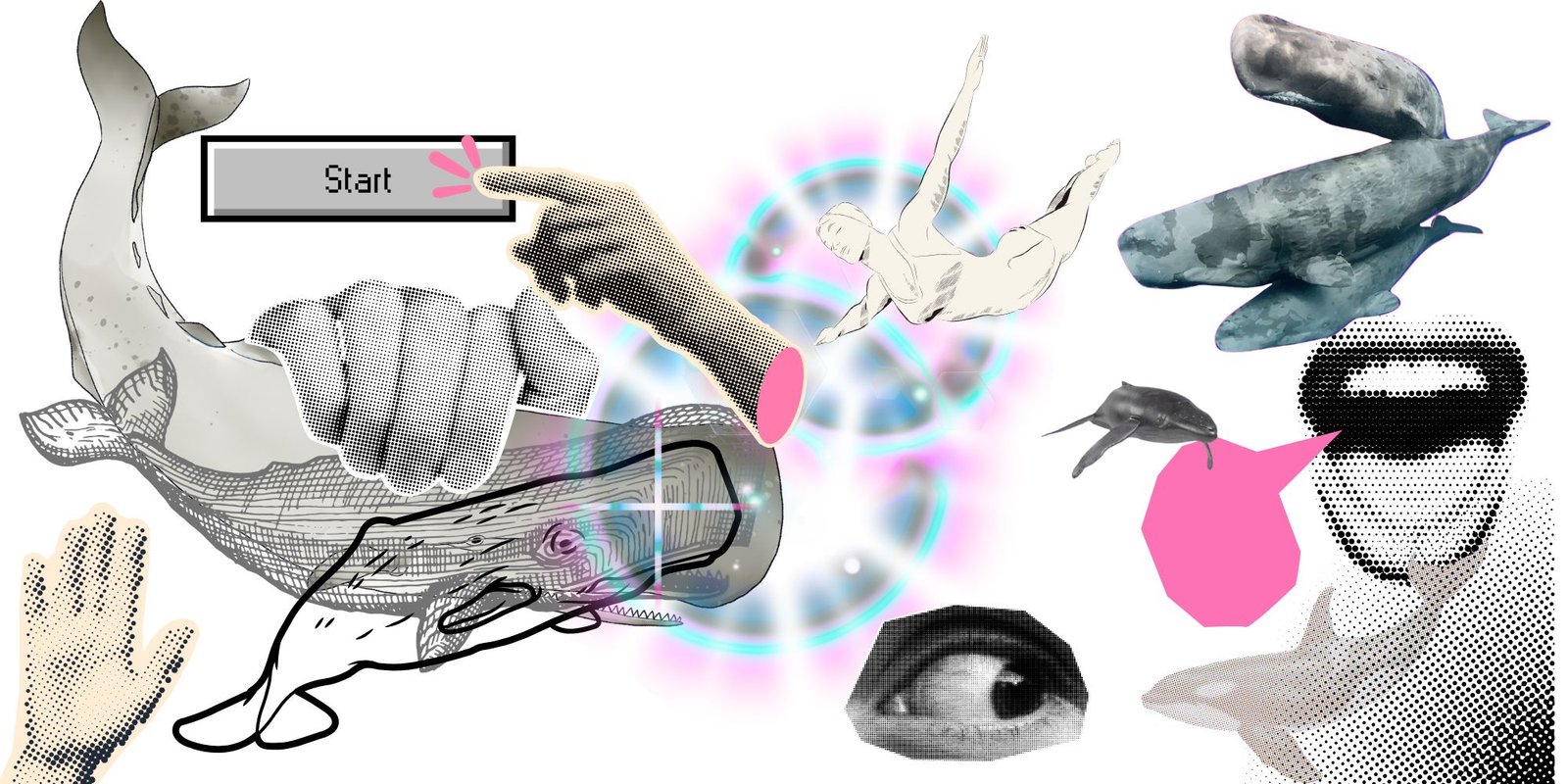
How to cite this page: Wer Ziemian and Marie Comuzzo. “Listening Diffractively with Whales,” Listening With Whales, 17 September 2026, https://listeningwithwhales.org/diffractively. Image: Digital collage created by Wer Ziemian
What does it mean to listen with whales?
And how may we approach it methodologically both within and outside real lived encounters with whales? To answer these difficult questions, let us begin in the middle, because any point is as good as another. This digital commons is an invitation to listen diffractively: the practice of reading each page through one another, to draw out the patterns of difference and similarities that emerge, and to learn about human and whale relations in linear and non-linear ways.
We center echolocation as method: a listening through, posing what might happen when sound becomes touch.
Throughout the site, different knowledges intersect, overlap, part, and share pockets of wonder that enact different and new ways of knowing. On the one hand, we call for a process of learning/listening/experiencing that is non-hierarchical and happening all at once. On the other hand, we center echolocation as method: a listening through, asking how knowledge transmission changes when sound becomes touch.
We bring these methodologies together because listening with whales necessitates both: listening in a chaotic/non-linear/non-hierarchical way, and a listening through (Hunt 2014; Fitzgerald-Allsopp 2025). Doing so, we practice “erosic attuning” as we let some of the Enlightenment scientific methodology erode and dismantle built-in Western-centric philosophical and ontological certainties (Kimmerer 2013; Held 2006; Haraway 2008; Comuzzo and Ritchey 2026). As we do, we resist the idea that a whale needs to be fully known before it can be respected (Glissant 1997; Janse 2024).
Together, these practices offer alternative ways of becoming that center our more-than-humanness, beyond speciesist boundaries (Haraway 2008; Van Dooren et al. 2016; Kimmerer 2013). We offer these theorizations against the backdrop of capitalist value systems that normalize “sacrifice zones” (Klein 2014, 144–163 and 268–272; Susam-Saraeva and Shread 2025, 4), framing certain lives as more valuable than others (Mbembe 2003; Weheliye 2014; Spillers 2003; Wynter 1994; Jackson 2020; Gumbs 2020). Instead, we propose a theoretical framework that centers “deep attention and intention—the attention we devote to the more-than-human and the intention to (re)cultivate relationality as a precondition for restoration ecology. In other words, not surveillance to capture, dominate or control, but rather attentiveness to nourish the multiple Earth communities” (Susam-Saraeva and Shread 2025, 6).
Feminist new materialisms are a contemporary theoretical movement that works to move beyond the Western binaries of nature/culture, body/mind, and the human/non-human. The movement favors relationality, coexistence, and ways of knowing mediated through the body, not just the mind. This posthuman subject is never “only human,” but always “more-than.” It is continually becoming-with other beings, constituted through its relations rather than prior to them (Kimmerer 2013). There is no outside, there is also no external force coming to rescue us, and the only place from which anything can be changed is from within the entanglements we are already part of (Haraway 2016, 3).
Barad names this interconnectedness of existence as ethico-onto-epistemology: the inseparability of ethics, ontology, and epistemology; the recognition that how we know, what we take to exist, and what we owe one another are not three separate questions but one. If knowing is this entangled with being and with responsibility, then it cannot be the work of a neutral, detached observer.
“We are showered every day with gifts, but they are not meant for us to keep. Their life is in their movement, the inhale and the exhale of our shared breath. Our work and our joy is to pass along the gift and to trust that what we put out into the universe will always come back.”
Robin Wall Kimmerer
Braiding Sweetgrass
objectivity?
Objectivity is not so much a process through which objective knowledge is produced, but a perpetual discerning of what knowledge counts and what doesn’t.
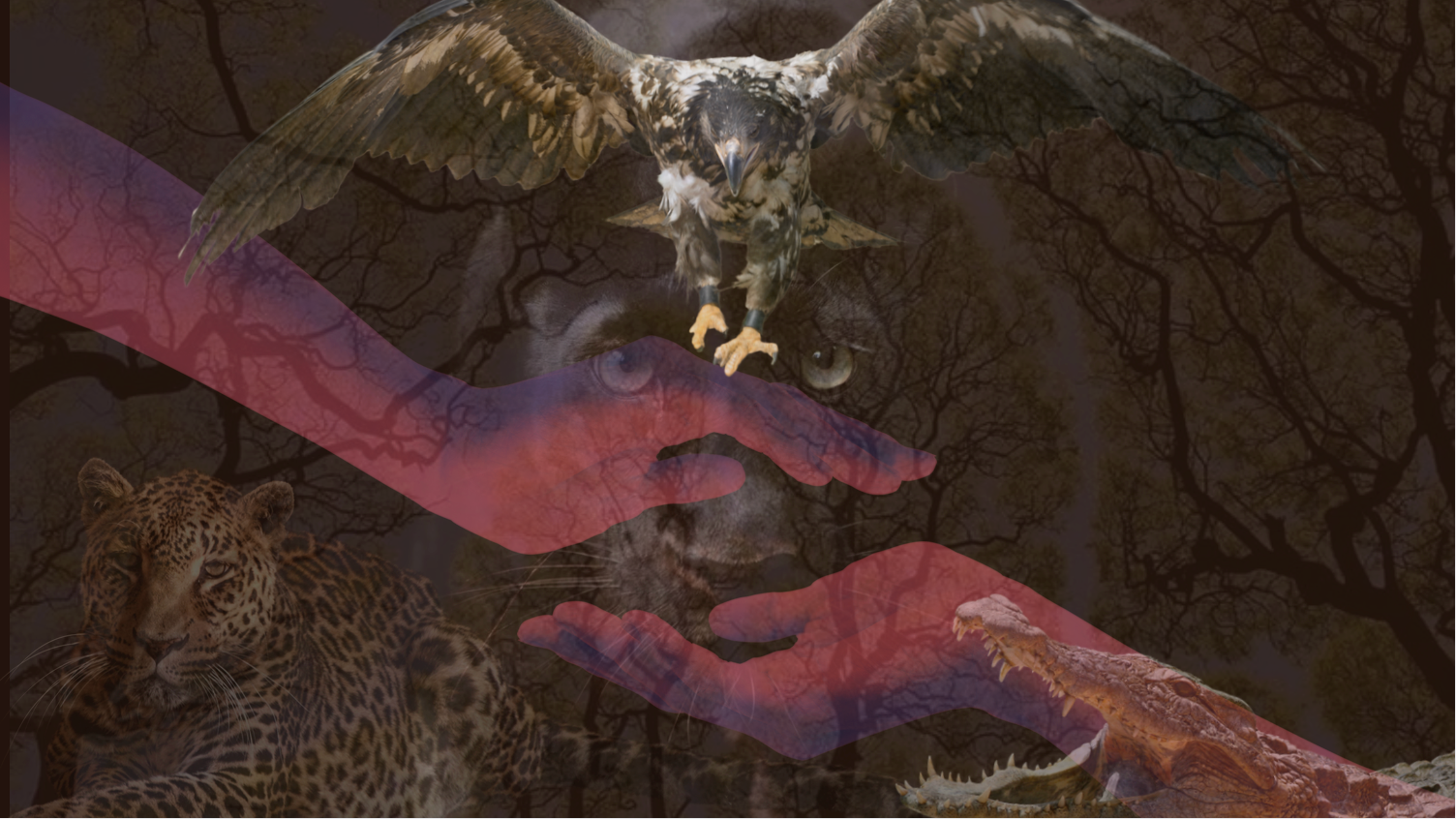
If knowing is this entangled with being and with responsibility, then it cannot be the work of a neutral, detached observer.
For a way of knowing to count within dominant institutions it must be made legible, and that demand for legibility might be itself a form of epistemic violence, drawing the boundaries of what may be seen as real (Hunt 2014, 29; Susam-Saraeva and Shread 2025; Susam-Saraeva 2026). As Haraway argues,
In the situated inquiry of knowledge production, change becomes possible through the gaps between intellectual, living expression, and translation (Hunt 2014, 30-31; Susam-Saraeva and Shread 2025; Susam-Saraeva 2026).
Knowledge production is not suspended above the world, but it emerges from within it. And because of that, even the most innocent-seeming gesture of perception is already a stake and we should ask: Which knowledges were erased for “objectivity” to dominate? And what kind of knowledges emerge when decoloniality and non-hierarchical coexistence are at the center of knowledge production?
The new materialist feminist standpoint redefines objectivity: against the “god trick” of seeing everything from nowhere, it offers the embodied, partial, accountable perspective of someone who is somewhere, and whose answers reflect the view they have. This partiality of knowing reminds us that full translatability is not possible. Constructing meaning always carries the risk of missing something.
Instead, the diffractive approach allows us to stay with the encounter long enough for it to teach us what, in this relation, we are answerable for. Diffraction is a wave phenomenon.
Listening across differences
Waves bend around obstacles, overlap, and produce interference patterns, which are patterns of difference. Listening across differences becomes the method through which holistic knowledge production happens. Barad reaches for diffraction precisely because it is about difference, not reflection. Within this framework, knowledge is not a mirror of what is real, instead, it opens this optical metaphor toward the more spatialized and embedded approach. That’s why while being attentive toward the whales, we might change our epistemic perspective and think about the waves of sound.
In what follows we propose listening with whales, through diffraction while specifically centering echolocation, attunement, and trans-crossing porosity as ways of being, knowing, and becoming.
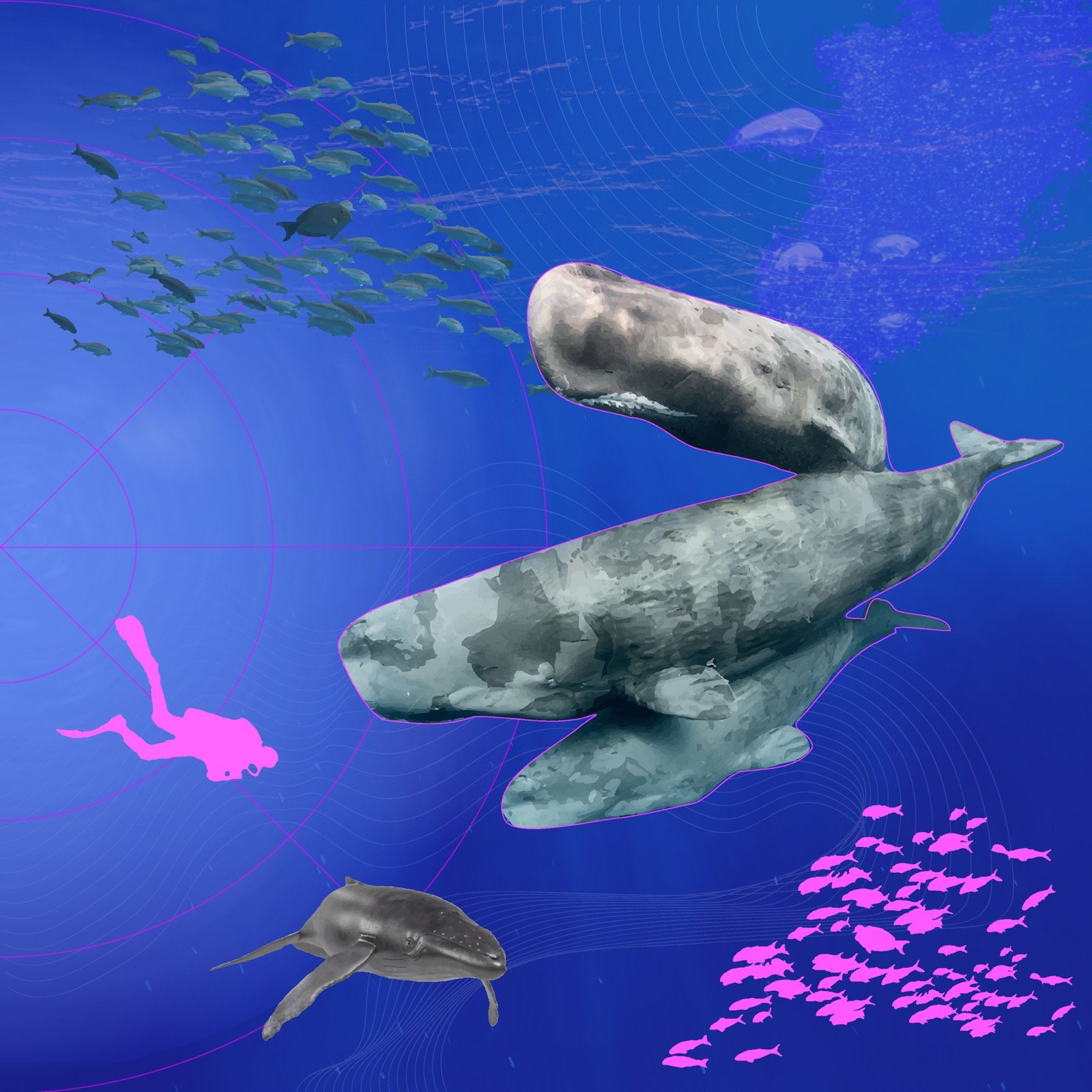
A note on terminology: we use “more-than-human” rather than “non-human” to think beyond the biological boundaries of what is considered alive or “real” and what is not within Western thought. Thus, the term also includes rivers and mountains, but also transcendent entities fundamental to “Indigenous and other non-Western cosmologies, including spirits, (…) and ancestors” (Price and Chao 2023, 181; Sykes 2018).
And we use “they/them” pronouns, as opposed to “it.” Language shapes how we think, how we encounter one another, and how we make sense of the world. Robin Wall Kimmerer teaches us that “in Native ways of knowing, human people are often referred to as ‘the younger brothers of Creation.’ … humans have the least experience with how to live and thus the most to learn—we must look to our teachers among the other species for guidance” (2013). In this spirit, she warns us that the English pronoun “it” holds a profound epistemic power, de-animates and objectifies the world around us.
When a whale becomes an “it,” they become something we can act upon without honoring our shared roles. Kimmerer invites us to reconsider using the habitual pronoun “it” and to imagine forms of language that better reflect kinship and relation with more-than-humans. Choosing “they/them” over “it” when referring to the ocean, a whale, or another more-than-human, is a small but meaningful practice of attention, care, and attunement: a practice of re-animating the worlds that surround us and placing ourselves back in relationship with them.
“While Western humanist subjects have long imagined themselves as distinct from their environments, as subjects acting on passive objects or resources surrounding them, the jellies exhibit another way of being in which the living creature is immersed within and inseparable from its watery world.”
Stacy Alaimo
“Jellyfish Science, Jellyfish Aesthetics”
In research on marine mammal welfare, representationalism is visually centered. Welfare is defined through biological indicators that reduce the animal to an object of management and a carrier of data. The logic is one of scaling. Anna Tsing links this to the capitalist economy: the point is that methods and classifications can be transferred easily between facilities and species, which is usually possible due to the presupposed reduction and formulation of life as economic value (2015, 37-38; Buller 2022).
Protocols such as C-Well© (Clegg and Delfour 2018) adapted directly from agricultural standards of industrial husbandry, attempt to capture welfare (including the emotional sphere) as a measurable, comparable, optimizable parameter.
The researcher takes up the position of a neutral observer outside the situatedness of the study while the project’s aims and ideological, philosophical, and ontological assumptions that the study design necessarily holds remain invisible. Indeed, alongside many others, we argue against the idea that objectivity and the cold distancing from more-than-human subjects in order to study them, is conducive to more objective results.
Instead, we tie this methodology to colonial genealogy and scientific forms of colonial cultural imperialism.
Interconnectedness of what and how
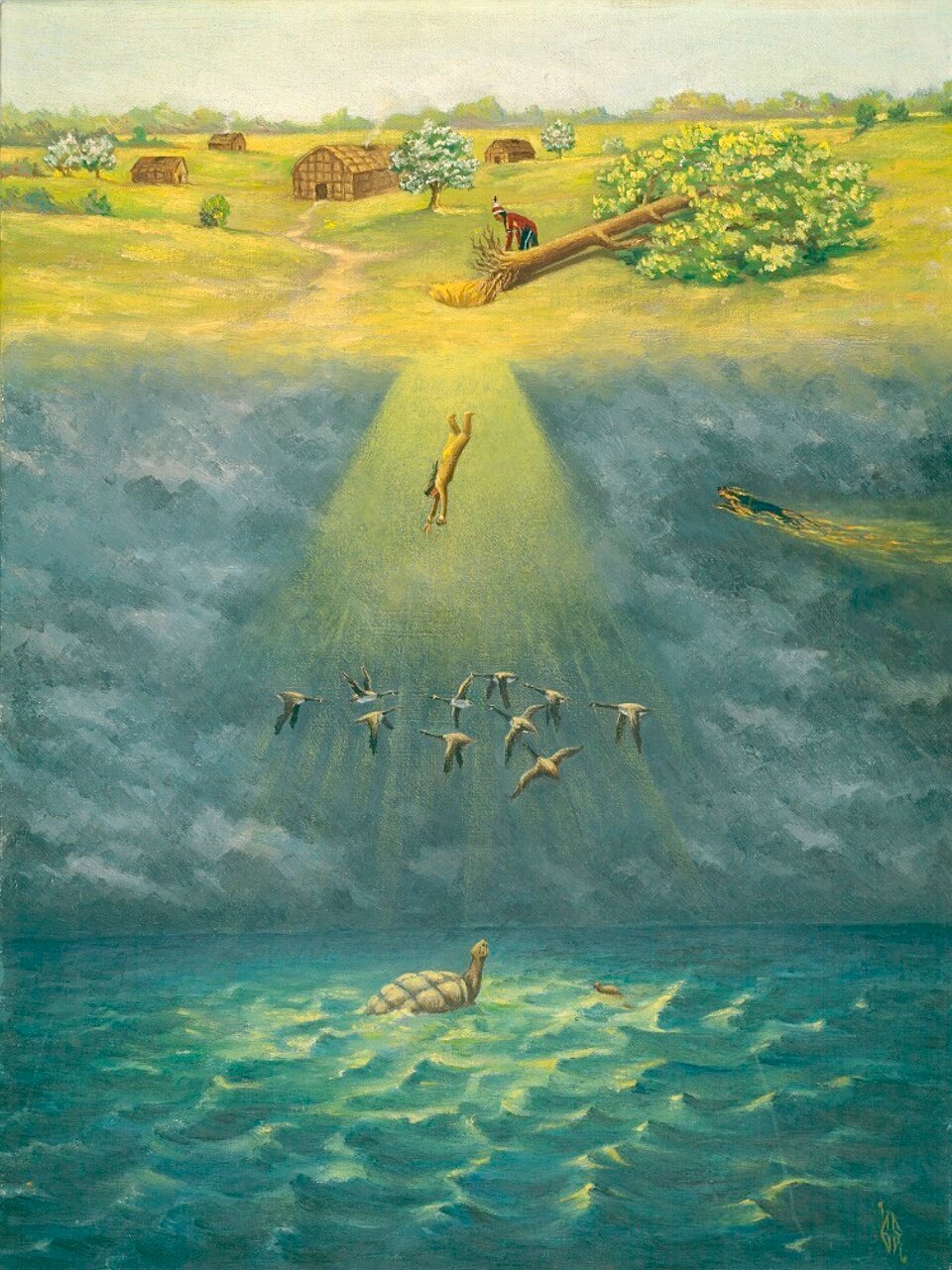
Tłaliłila’ogwa scholar Sarah Hunt explains how Indigenous knowledge is always negotiated against pre-established modes of inquiry that need to be fixed into recognizable forms to register as knowledge at all. This often leads to the methodologically necessary interconnectedness of Indigenous knowledge and relational approaches being reduced and cut in order to fit into legible frames within Western thought and sciences (Hunt 2014, 29-30). Similarly, within Haudenosaunee and Anishnaabe thinking, theory and practice are never two things that can be pulled apart. This is also true among populations that live in close kinship with whales, including Māori, Mirning, Yuin, and Lummi people.
Indigenous Studies scholar Vanessa Watts shows that the division of theory and practice is itself a part of how colonization works: emptying the world out and re-writing it to support colonial extractivism. So this whole insight isn’t some new discovery, as it’s been lived all along, and earlier, by the very people this kind of theory likes to borrow from. It matters how we attend to the encounters within the research processes.
What are we inviting, and what do we wave together? How do we respond to the issues that are calling for our answer? Every metaphor, method, framing here matters, as it opens the door for the next consideration and actions.
To hear a whale’s response as binding rather than as data is, structurally, a similar gesture to reading through rather than reflecting: care and diffraction make the same refusal of representationalism, and the same demand that whoever attends be present and answerable within the relation.
Crucially, the supposedly neutral and objective scientific vocabulary that prides itself on avoiding “biased” terms is, for Alexis Pauline Gumbs, one of the instruments of colonialism, because it refuses to articulate the power relations and the experience of oppression. By disavowing situatedness, the power relations through which knowledge is hierarchically produced and categorized, it renders histories and experiences of oppression less visible.
When these forms of cultural imperialism are enacted, beings are separated according to their species-specific attributes and dialogicity across species is erased for lack of rational evidence; whales and other more-than-human remain excluded from the recognition that they too are co-creators of knowledge, culture, and ecological balance (He Whakaputanga Moana 2026; Chami 2024; Marshall, Edwards, and Baechtold 2026; Moananui Agreement 2026; Kropotkin 1902; Ohlson 2022). This is seen most clearly in what the paradigm continuously overlooks.
Lindy Weilgart reminds us that the ocean is not a sterile laboratory, and that the eternal wait for “complete” and “biological” proof of the impact of noise may be completed only when it is already too late (2017, 121). Instead, the relentless presence of anthropogenic noise (caused by sonar, shipping, military experiments, industry, and the forthcoming deep sea mining) disrupts normal interactions between cetaceans, causes mass strandings, and is proven to disrupt marine mammals’ hormonal levels. This is indeed a relentless form of torture (Susam-Saraeva and Shread 2025, 5) that many of us remain privy to, also partially because of our predominance of sight as our way of knowing the world (Weilgart 2017, 115). Instead, when sound is vision, as for many echolocating marine mammals, anthropogenic noise becomes a thick, impenetrable fog that obscures their “vision,” their ability to feel and connect with one another, and “stay in touch.” In other words, if they see through sound, and noise fills the ocean, that noise prevents them from seeing.
Rebecca L. Farnum, “Whale Song, War Song is an audio art piece informed by sound ecology and political economy documenting the sonic warfare that corporate greed is raging on our beloved Ocean.” See more here.
Anthropogenic noise travels for thousands of kilometers through water, so the ocean one listens through is already saturated with the acoustic signature of shipping, sonar, and extraction. To listen diffractively through the hydrocommons is therefore to listen to a wounded medium, and this is why the work belongs to the blue humanities (Menz 2024), where “blue” names at once the aquatic and the melancholy of ecological loss: such listening is also a form of grief (see also grieving with whales).
However, in this essay, we are most interested in echolocation as a way of seeing that also necessarily involves attunement, and embodied knowing, in that marine mammals’ vision and human sight differ epistemically. Echolocation also listens through, while sight remains superficial to the externality of the body. Here we ponder whether we may learn from marine mammals a way to listen and see concurrently that practices echolocation as method (Gumbs 2020).
The watery bodies of the following section, permeable and continually exchanging their substance with the world, are the corporeal form of the same kind of refusal: there is no self-sufficient and self-made author just as there is no self-contained body: only sites of passage, mixture, and flow.
Diffractive methodology is an entangled practice of knowledge absorption and creation:
insights, theories, and disciplinary practices are read through one another so that each becomes a grid through which differences are held and produced rather than resolved. Its aim, as Karen Barad puts it, is to cultivate entanglements and hold a genuine many-sided conversation among understandings that arise from different practices (Barad 2007, 92-93).
And how may we approach it methodologically both within and outside real lived encounters with whales? To answer these difficult questions, let us begin in the middle, because any point is as good as another. This digital commons is an invitation to listen diffractively: the practice of reading each page through one another, to draw out the patterns of difference and similarities that emerge, and to learn about human and whale relations in linear and non-linear ways.
Because the drawing of a boundary between disciplines is itself a material-discursive act, a diffractive method does not treat those boundaries as a given. Instead, it continuously undoes them, as it works across texts, disciplines, temporalities, and many different ways of knowing. This is a fundamental aspect of listening with and through, as it resists full clarity and transparency, in favor of entangled, chaotic, concurrent, and extraneous ways, while also claiming a right to opacity (Glissant 1997).
In “Diffracting Diffraction: Cutting Together-Apart” (2014) Barad names the specific gesture: a cutting together-apart, which causes differentiations at the same time that it draws connections, commitments, and moral obligations, which are never separate from one another.
“There is no ‘I’ that exists outside of the diffraction pattern, observing it, telling its story. In an important sense, this story in its ongoing (re)patterning is (re)(con)figuring me. ‘I’ am neither outside nor inside; ‘I’ am of the diffraction pattern. Or rather, this ‘I’ that is not ‘me’ alone and never was, that is always already multiply dispersed and diffracted throughout spacetime(mattering), including in this paper, in its ongoing being-becoming is of the diffraction pattern” (Barad 2014, 181-182).
In this sense, research, encounters, and listening with and through profoundly shape, reshape, and re-attune, the one who researches. Authorship then is never truly single authorship, or the manifestation of a single individual; it is a multiplicity of encounters and transformative entangled becoming, where the line between citation and one’s “own” words blurs. As Trinh Minh-ha says, the story is always older than the one who tells it (Barad 2014, 182).
ethics of care
Listening thus is co-produced through the listening, together with the listener and the one listened to, and thus cannot be “objective” in the Enlightened sense, nor can it be neutral. Instead, it is always an intervention, held in irresolvable tension across its three dimensions of labour, affect and ethics-politics.
Listening is already an intervention: held in irresolvable tension across its three dimensions of labour, affect and ethics-politics
Virginia Held points out that we need an ethics of care, not merely care. She names the danger that attentive, benevolent listening can curdle into a mode of capture. A desire to know the other can quickly slip into soft surveillance in order to manage them, “save them,” or “help them” (2006).
For example, Audre Lorde insists that poetry is a vital necessity: the filter through which feeling is named and made thinkable, and that the split between feeling and thought, poetry and theory, is a tool of the order that controls us by dividing us. Instead of Descartes’ “I think, therefore I am”, the poet within whispers, “I feel, therefore I can be free” (1984, 38). Lorde also centers the erotic as a source of power and a lens turned on every part of existence, drained by any system that defines value as profit.
To listen diffractively is therefore to take responsibility and be accountable for the material consequences that attending, knowing, and researching have on the subjects researched, the listener, and their shared environment. It refuses the listener/listened-to binary that treats the very act of attending as material, affective, political participation in the world (Barad 2007, 72, 384). It practices ways of attuning that are imaginative and real, to encourage a reach beyond the human self into the “more-than-human” (Sturgeon 1953; Abram 1996). Care toward an animal or better, a more-than-human, is not speaking for them or producing a faithful picture of them but entering into dialogue: attending to their bodily and affective response and treating those as morally binding, not as raw data awaiting the researcher’s interpretation (Donovan 2006; Meijer 2019; Comuzzo and Ritchey 2026; Flodin 2021). The turn toward or away, the call, the withdrawal – these are signals to be listened to, seen, and answered (Meijer 2020).
To hear a whale’s response as morally binding rather than just data is similar to a gesture of knowing through rather than simply seeing, or being moved by an experience, rather than just remaining untouched and distant. Diffraction, alongside care, refuses representationalism at the same time that it demands that whoever attends to the encounters be present, answerable and morally binding within the relation.
micro-encounters
Diffractive listening proceeds by micro-encounters: situated and unrepeatable events of attention. Each reads as a meeting in the between, from which care, agency, and difference materialize as concrete intra-actions (Barad 2007, 141). To listen diffractively is to refuse the move that dissolves a specific whale here and now, into a population, a dataset, or a managed average (Meijer 2019, 128; Corbey and Lanjouw 2014). Instead, the diffractive approach allows us to stay with the encounter long enough for it to teach us what, in this relation, we are answerable for.
Situated and unrepeatable events of attention, each read as a meeting in the between, from which care, agency, and difference materialize as intra-actions
arts of noticing
This widening of the perception has a methodological name in Anna Tsing’s work: the “arts of noticing” (2015, 17). Noticing is a discipline of attention that refuses to subsume what it meets under ready-made categories and narratives.
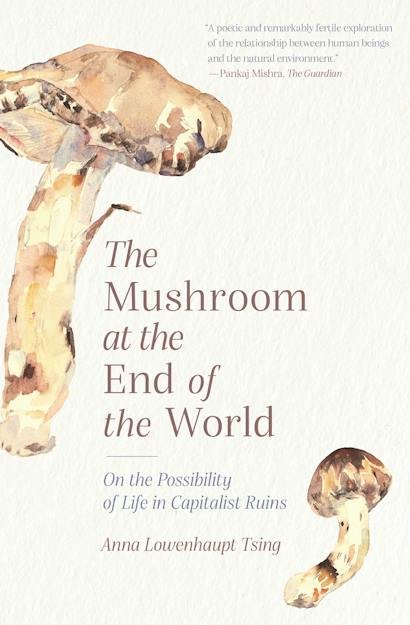
Instead, it stays sensitized to the particular elements of an assemblage and the unexpected connections among them, different in every landscape. It is descriptive and observational, and it is set explicitly against the unifying classifications of population science, which dissolves the encountered creature into “individual,” “species”, or “population.” Its aim is what Tsing calls “latent commons”: the non-antagonistic, mutualistic, more-than-human entanglements that might be mobilized in common cause (Tsing 2015, 135).
Noticing thus implies much more than sight alone. Tsing criticizes the excessive reliance on sight by centering hunting for matsutake as method. She explains that when she just “looks,” she fails (Tsing 2015, 14, 241-242, 277).
To find a good mushroom, she needs all of her senses; foragers attend not to the visual “image” of a mushroom against the forest floor but to its “lines of life.”
In mushroom hunting, smell carries the heaviest weight: scent is a chemical sensibility that alters the body, the sign of another presence where air had pretended to be transparent. It affects her body, alongside those of trees, deer, insects, and soil bacteria, who are all “touched by” the matsutake’s smell (Tsing 2015, 156).
Perception here is multisensory, embodied, and relational, with no sovereign eye presiding over a hierarchy of senses.
When Tsing reaches for a figure to describe attending to the world’s many simultaneous rhythms, that figure is itself acoustic: it is polyphony. Here polyphonic knowing gathers separate but co-occurring melodies and attends to their passing moments of harmony and dissonance rather than to a single dominant line (Tsing 2015, 24). To listen diffractively is then to practice the arts of noticing in this acoustic register and to attune oneself to the concurrent voices and fields of differences.
So to name the world one way rather than another, to cut subject from object here rather than there, is already an intervention with material and political stakes.
Representationalism is precisely the fantasy that one might interpret without changing, see without touching, know from nowhere.
The diffractive method relinquishes the fantasy of distant objectivity and accepts that ethics, values, and morality are folded into every part of the research process, from the outset. The question that emerges, then, is how, and with what tools and responsibility–response-ability–we are prepared to bear in the encounter.
Polyphony and Echolocation= Porosity and Being Moved
A wave is the literal medium of affect: sound is a pressure wave that arrives by moving the body it reaches, setting tissue, water, and bone into sympathetic vibration before it is ever parsed as information in rhythms that precede reason (Davis 2000, 18). Sound moves us, literally. It passes through the body, sets it trembling, resonates within it. And in water, a much thicker medium than air, sound becomes bone-deep touch.
Echolocation is built entirely out of this resonance, a knowing inseparable from being moved and from moving. Echolocation is therefore a politically and materially situated way of knowing and listening meant to do something (Braidotti 1994, 4-5). Like every figuration, it is chosen from somewhere and for something: aesthetically, because it reorganizes attention and feeling; materially, because it draws on the actual sensory practice of the more-than-humans we attend to rather than projecting our own optics onto them; and epistemologically, because it foregrounds modes of knowing (sonic, vibrational, relational) that the ocularcentric tradition has kept at its margins (hooks 1984).
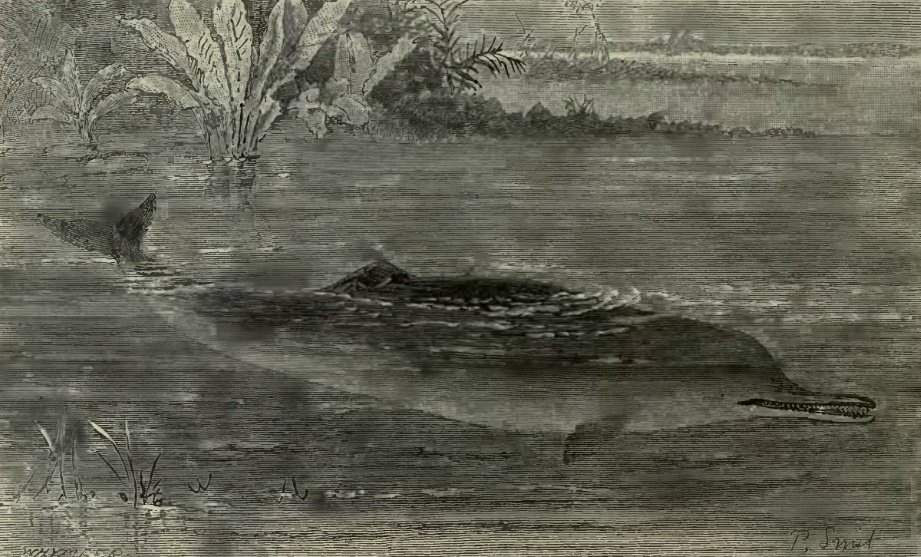
The Ganges river dolphins “see with their voices”: they know the world through ceaseless echolocation, through a sonic question posed without end, where am I now and now and now (Gumbs 2020, 24). The echolocating whale emits sound and reads what returns changed by reflection from its surroundings. Knowledge arises from the difference between what was sent and what comes back; orientation is an interference pattern. To use Abram’s words, we might call a perception an “ongoing interchange between [the] body and the entities that surround it” (1996, 41). Gumbs, with similar reciprocal and sensuous approach, states
“Instead of simply naming what is what, I had to dive deeper. I took an example from the echolocation method developed by many marine mammals. I had to focus not on what I could see and distinguish, but on the sound bouncing off my body as it exists in relation to the surrounding structures and environments, including those imperceptible. On the sound that situates me in an ever-changing relationship with you, whoever you are at this moment” (2020, 7)
what happens when sound becomes touch?
Bodies are porous and permeable, not fully closed, in continual exchange of matter with their surroundings. Our bodies have always been bodies of water caught in a planetary hydrocommons founded on interdependence and mutual vulnerability (Neimanis 2017, 169). This figure is set explicitly against what Jamie Linton calls modern water: water imagined as neutral, abstract, chemically distinct (H₂O), quantifiable, and held “outside” as a transparent representation (Neimanis 2017, 19). Modern water is the representationalism of extracted “sanitation,” a cutting of all its meaningful existence. The same gesture that holds the whale outside as a measurable object holds water outside as a manageable resource. To change how we think about water, Neimanis insists, is to change how we think about bodies (2017, 19).
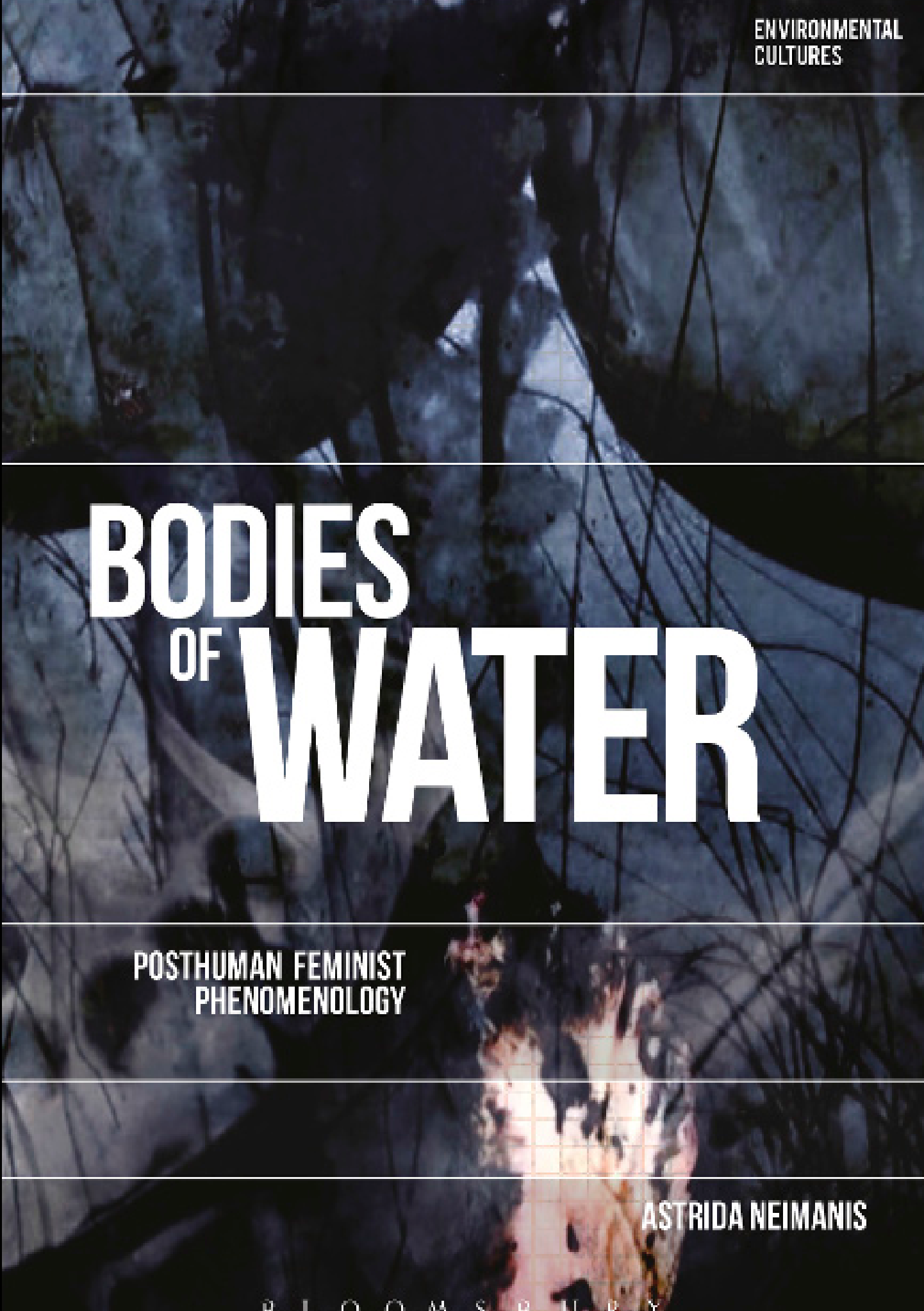
To trace bodies’ interconnectedness through water, Neimanis traces how industrial and colonial waste travels through wells, rivers, and ocean currents into fish, and from fish into the milk of nursing women, so that, in one of her examples, an Inuit mother’s milk bears the chemical signature of a colonialism that “do not require direct proximity to a colonizer” (2017, 36).
Such flows are trans-corporeal: ground, river, fish, and human are caught in one another’s currents, and the whale, in whose body fat toxins concentrate, becomes the body that gathers the message within their tissue, bearing the failure of imagining alternative ways of co-existing that don’t require mass pollution (2017, 103).
Because toxicity travels, it also dissolves scales of knowing, where macro and micro then share same entanglements. These flows are material, but they are also political, ethical, and semiotic at once: they speak to us, if we listen.
The very medium carrying these toxins also carries sound. Anthropogenic noise travels for thousands of kilometers through water, so the ocean and their inhabitants listen through an already saturated acoustic realm filled with the sound of extraction: shipping, sonar, mining, bombs, tourism. Listening through the ocean means to listen through a vast grief, holding ecological loss, commercial whaling, mass-harvesting of fish through the churning of sea floor and corals, the memories and aftermath of the Middle Passage, and the continued forms of resistance that marine mammals are enacting (Menz 2024; Gumbs 2020; Comuzzo and Ritchey 2026).
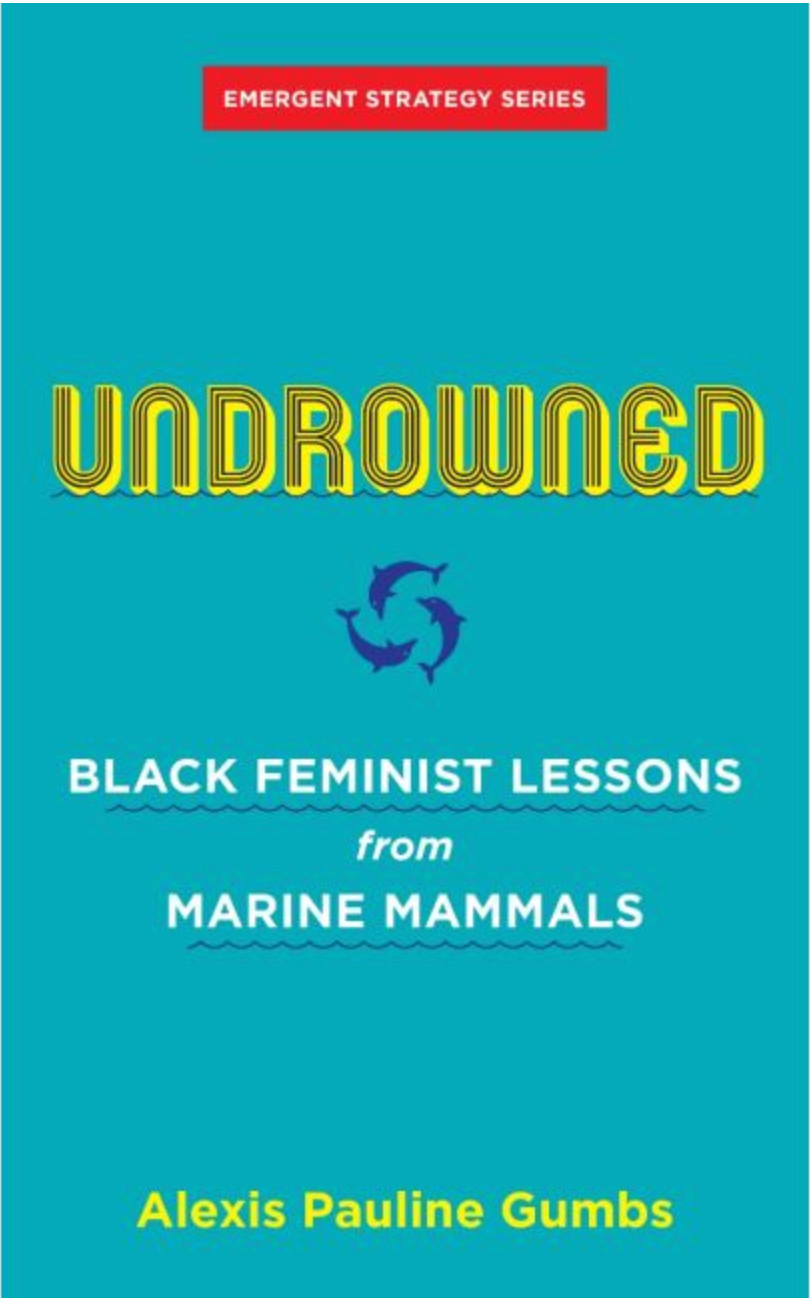
“Instead of simply naming what is what, I had to dive deeper. I took an example from the echolocation method developed by many marine mammals. I had to focus not on what I could see and distinguish, but on the sound bouncing off my body as it exists in relation to the surrounding structures and environments, including those imperceptible. On the sound that situates me in an ever-changing relationship with you, whoever you are at this moment”
Alexis Pauline Gumbs
Undrowned
Echolocation and Diffraction as Method
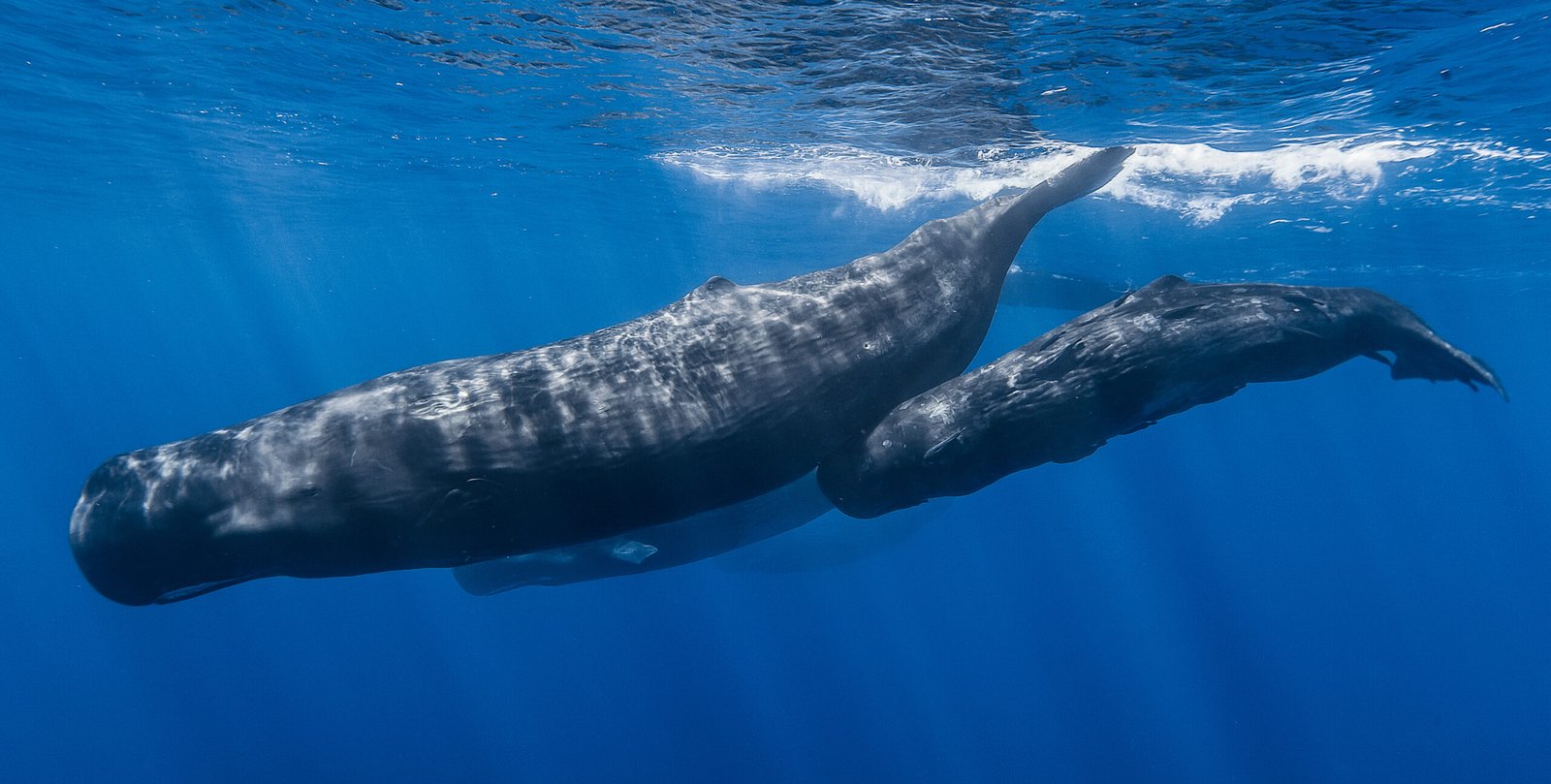
Gumbs gives this politics its sharpest name by reading the militarized, capitalist ocean as a necropolitical order as theorized by Achille Mbembe: a sovereignty that consists in deciding which lives may flourish and which are exposed to slow death and endless exploitation (2003). She anchors that reading in water itself, tracing a line from the transatlantic slave trade that normalized the kidnapping of Native African people, and their displacement across the ocean.
This transition marked their passage from selfhood to property: one that almost two million of them resisted, through jumping overboard, sickness, death, and other forms of refusal. Gumbs links this history to the present condition of marine mammals’ confinement: sedated, bred, and severed from their kin for profit. This is especially evident with orcas, whose commodification as “beloved” demanded their forced capture, life-long imprisonment, and often premature death.
This “love” wasn’t reciprocal or morally binding. It benefited parks’ capitalist pursuits and the looking audience that didn’t listen through orcas’ pain (Gumbs 2020, 34; Comuzzo and Ritchey 2026; see also Michaela Harrison’s work).
Gumbs teaches us practices for holding those who drowned in the Middle Passage close, while we refuse drowning ourselves in light of the continued forms of oppression, torture, and genocides. As she listens for strategies of survival, she teaches us with cachalot: no matter how deep you dive, and how long you stay in that depth, you must always resurface and take big deep breaths, before continuing the work. Staying too long in the dark deep, in other words, quickly results in drowning (2020, 127).
What kind of accountability and moral compass would emerge from understanding every action as a generator of an echo that permeates into the world and returns to us our very action? As we listen to those echoes, we might ponder how to change our ways and counter extractivism and a disembodied blind-sighted run for profit.
To listen through the ocean and with whales is to ask whose suffering is permitted to register and whose deaths are heard. Opening to this reciprocal perspective means to change one’s relationship with what is encountered, by choosing to treat it as a shared gift instead of as a commodity (Kimmerer 2013, 30-31; Sykes 2018; 2020).
This action requires especially non-Indigenous and historically hypertrophied people to step out of the position of expert and shapeshift into an attentive, diffractive, embodied listener (Hunt 2014, 31). The refusal of the heroic observer in favor of a practice that is collective, relational, and joyful is one that can transform pain and suffering into a means of connection and an energy for change (hooks 1984, 40; Federici 2020, 125-126; Comuzzo and Ritchey 2026).
Listening diffractively with whales then doesn’t promise that we will ever fully know the other, but it promises something more difficult and more honest: that in listening, we will change ourselves, and change the fields in which we are becoming together. It is to become a wave among waves in the field they and we co-compose.
Ziemian, W. (2026). Od patrzenia do echolokacji: Posthumanistyczne retoryki dobrostanu ssaków morskich. From Looking to Echolocation. Posthumanist Rhetorics of Marine Mammal Welfare. Res Rhetorica, 13(2), 91–112. https://doi.org/10.29107/rr2026.2.4. If you’d like to read the translated text, please reach out to Wer at werziemian@proton.me
What concept, practice, or way of knowing might diffract this page through? Be a wave among waves!
Did you catch a mistake? Report it for a krill!
Listening with Whales is a living, growing digital commons. Sing it out: share this page!