Written by Teja Šosterič and Marie Comuzzo
How to cite this page: Šosterič, Teja, and Marie Comuzzo. “Orcas,” Listening With Whales, 19 September 2026, https://listeningwithwhales.org/orcas.
Across the planet, orcas inhabit all oceans and most seas. Their rich cultures encompass specific and unique dialects, ways of connecting with each other, highly specific hunting techniques and feeding choices that are passed down by the matriarchs generation after generation. While much of their lives remain an underwater mystery, human groups throughout history have kept a long-lived relationship of kinship and familial ties with whales.
Explore OrcaSound‘s best Southern Resident recordings, of the J, K, and L pods; and learn more about the Bigg’s here. Learn more about individual orcas and so much more at the orca behavioral institute. Learn more about the wide array of Southern Residents’ Echolocating Clicks and more generally about all of the different sounds at this catalogue. Each pod has unique dialects and thus this is a very limited list of resources.
Live Orcas in the Puget Sound and explore the hydrophone (under water microphones) network here.
Orcas and First Nations, Indigenous, and Aboriginal people have live and lived in close kinship for long generations. Dr. Jodi Edwards for example explains about her and her people, the Yuin‘s practice of singing to whales, and them coming. While many of their shared songs are not recorded or readily available, they exist and have been sung for many generations.
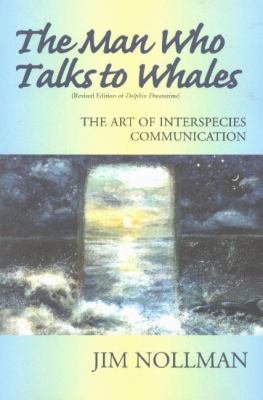
From 1985 to 2002, Jim Nollman organized regular jam sessions between musicians and orcas, who usually would show up around 9.30 pm. See below.
Learn more about the different orca pods and populations here & more on how to identify them, and about them across the world here below.
Lummi Nation's advocacy to free captive orcas
Lummi people have long worked to protect their relatives qwe’lhol’mechen, “people that live under water” in the Puget Sound (US), following the kidnapping of many of their family members in the 1960s
Click here to learn more about Lummi warriors’ work to free Sk’aliCh’elh-tenaut (Tokitae or Lolita). For more on Indigenous governance and activism see Sacred Sea and Chinook na’ah illahee fund. And to learn more about orca sightings see Orca Network.
Talking about the capturing orcas, two spirited Lummi warrior Freddie Su Ka Dub Lane draws parallels between what corporations are doing to their relatives above and under the water.
Aboriginal yuin familial ties
The Aboriginal Yuin people of the South Coast of New South Wales in Australia, whose familial ties with orcas are most often told through the cooperative relationship with “Old Tom” and their collective hunting (more on this below).
“Species recovery to me is not a strategy, it’s a ceremony, it’s a restoring of the rhythm between us and the sea” – Dr. Jodi Edwards
Listen to Dr. Jodi Edwards‘s call to action and her advocacy for Indigenous research and matriarchal sea kin—both human and orca people—and for the relationships that also unfold through song.
Scientists estimate that there are somewhere between 50.000 – 100.000 orca worldwide. Orcas are cosmopolitan, like blue whales, great white sharks, and homo sapiens, appearing from the Arctic to Antarctica. According to official records, orcas are monospecific (much like belugas, narwhals, and again homo sapiens) – yet the vast cultural differences between the various orca groups separates them from these other examples. Orcas put into question what even is a species, complicating the already fragile line between what is biological and what is cultural: the variety between different orca societies has led to several calls to separate them into several species; first in 1869 and most recently in 2024. These split-species proposals have been denied not because they are not valid, but likely because they would have repercussions for the rest of the orca groups across the globe. The groups researched most extensively by humans are smaller groups of usually resident pods which live close to the shore, for obvious proximity. The lives of offshore orcas are much less known, and that is the majority of the individuals. This does not mean they are not endangered – seen as one species, they are safe, but split into ecotypes, a different image emerges.
Wild orcas live in tribes and have deep family ties. Their families – called pods – are usually led by post-menopausal matriarchs, and the family members often live together, in the same pod, for their whole lives. These respected elders take care of the young, transmit knowledge, and lead the way for their pods. Male orcas depend heavily on their female relatives – if they leave their native pod, they roam alone. Most orcas have friends that are about the same age as themselves. The social structure of orcas is considered altruistic (p.412): They look out for each other when injured or grieving, support members who are disabled, and they have been seen helping members give birth and actively midwifing through difficult births by gently pulling the baby calf out. When the baby is born, orcas, like cachalots, help, collectively, the baby to float at the surface to take their first few breaths as they get used to the new, much colder and wider watery environment.
When their babies die, due to the rising pollution or other complications, the whole pod grieves their loss, taking turns holding the baby to the surface, and, in the case of J35 Tahlequah, and her baby Tali, did a 17-day procession across the San Juan Islands holding her for over 1,000 miles. Tahlequah sadly lost another baby in 2025. (see also erosic attuning and grieving with whales).
A surviving baby, however, will be cared for by its entire pod – primarily attended by its mother, other family members, including the grandmother, aunts, and uncles (p. 143), will play with the calf and teach it to speak and sing. Baby phonations are miscellaneous compared with later vocal complexity, which shows strong support that an orca language is taught.
allokelping and french kissing
Orcas are very playful and tactile. They allokelp each other, french kiss (also called “gentle tongue bite”), and build tools that they then use for various activities.
They are polygynandrous, which means mating with multiple partners, and seem to enjoy various types of sexual touch and sexual activities, including beak-to-urogenital slit orientation (the orca version of 69-ing p. 369-70).
Officially separated into at least ten ecotypes, orcas vary little biologically, despite being genetically unrelated. This means that while various groups do not intermix, even when opportunity allows, all orcas worldwide share a similar biology. Perhaps the most fascinating biological trait is the bio sonar, which is a part of their echolocating abilities. Toothed whales, of which orca are a part, have a melon, a special tissue structure used in producing an echolocating beam. This doesn’t only discern the shape of their target – it effectively penetrates it. Some orcas use it in hunting to tell one type of salmon from another, but the implications go further: a pregnant orca’s pod can recognize her pregnancy with the sonar, for example.
orcas across the world
Throughout history, orcas were cherished by Indigenous nations in the Pacific Northwest, Australia, and Peru. Their history with white settlers is a bit more complex. In the 1960s, they were seen as dangerous pests that were a threat to commercial and private fishermen. A machine gun was even mounted in Seymour Narrows, allowing for the shooting or passing orcas. Over time, the public image has shifted and now orcas are accepted as not only intelligent apex predators, but mascots for human entertainment, and more recently, a symbol of anti-capitalist rebellion.
In the Pacific Northwest, where the orcas best known to human scientists live, there are populations that share waters but do not interbreed – and haven’t for at least 100.000 years. The resident and transient populations have different traditions, diets, and language. Even sea lions, hunted by offshore orcas but left alone by residents, know how to tell them apart. The residents, who eat salmon, are a chatty bunch who keep only to themselves. Northern residents are known for rubbing bellies on sand beaches. The southern residents are fashion trend-setters, of the famous salmon hat trend, which was a riot in 1987 and was even thought to have returned – but with only one return example, the proof for that is lacking. Critically endangered, the southern resident close-knit families (known as J, K, and L pods) accept no outsiders.
Off the waters of Australia, in Eden, orcas and the Thaua people of the Yuin Nation shared a sacred relationship of communal hunting of baleen whales, under the “Law of the Tongue.” After orcas took their share, they would leave the rest of the body for their human relatives. Best known is the Davidson family, who worked closely with local Natives and a pod of killer whales, including Old Tom. When settlers and commercial whalers came to the island, greed won over kinship after orca and Yuin laws had been violated.
In Antarctica, four types of orcas live and hunt, and there, they outnumber humans. Some orcas there also hunt whales, specifically minke and other baleen whales. One of the orca ecotypes hunts by wave-washing, creating a wave that spills over pack ice, literally washing off whatever they want to eat.
Off the coast of South Africa, they feast on the livers of white sharks, wearing down their teeth with the rough shark skins until they are flat. There, famous boyfriends Port and Starboard are wreaking havoc on the local shark population. In Patagonia, they beach themselves to hunt prey, mostly sea lion pups, wiggling back into the water after.
In Spain, a tiny group of critically endangered gladiators antagonizes yachts. They do so by disabling the rudders, but without harming humans onboard. They also like to steal tuna off fishing lines. Globally famous among humans, what started as memes is slowly turning into serious conservation efforts and much needed research.
A special group are captive orcas – estimated at 55–60 worldwide. They are victims of human fascination: The same passion that fuels research is also the reason why these animals are held in captivity. Their lifespans shortened, they are robbed of their culture and language, often forced to breed, often incestually. They perform tricks on command and sometimes rebel. There are zero incidences of humans being attacked by the orca in the wild, but the same is not true for captive orcas, some of whom are thought to suffer a type of psychosis, and will sometimes turn on their captors. Several of them are or have been kept alone, with no orca companions for company. While activist groups worldwide fight to have captive orcas released, often led by their Native relatives, such as the Lummi, the reality is that long-captive orcas cannot survive in the wild. There is no orca sea sanctuary, and planned sanctuaries are facing difficult legal issues with not enough support and not nearly enough progress. However, some groups are working on creating such sanctuaries, see for example, While in the Western World, captive orca numbers are dwindling due to increased public pressure and new regulations, Chinese marine parks house almost half of the world’s captive orcas and continue breeding programs.
What was and continues to be necessary is an expression of kinship. Humans have plenty in common with orcas – female leadership, menopause, allomaternal care, love for song, love for touch, cultural variety, mammalian biology, disabled care, friendship, queerness, just to name a few. Despite best capitalist efforts, human-orca relationships can continue to be kind and compassionate. Orcas are known to synchronize their breaths as a sign of social affinity (p. 139) – perhaps that is how a sense of kinship can be built: by symbolically breathing together.
Live Improvisations with orcas
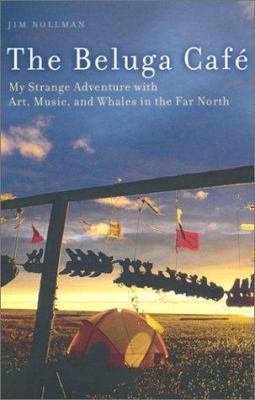
Jim Nollman released Orcas’ Greatest Hits in 2026, a collection of the most meaningful musical exchanges. These improvisations stopped because of rising sound pollution as well as new regulations that prohibit using underwater speakers to project sound underwater, unless for scientific or military experiments. After these regulations, Nollman started improvising with Belugas.
For more on Jim Nollman’s more-than-human musical collaborations, see Interspecies, a non-profit that he founded to develop wilderness programs, and among these, invite musicians, of any age and background, to get their chance to play with orcas. (Learn more about musical exchanges with whales)
Orcas’ Greatest Hits & grieving with orcas
For 20 years, between 1985 and 2002, Jim Nollman and friends (over 200 people total over 7 years) went out to record, improvise, share poetry and prayer with orcas in the Puget Sound. There, they recorded over 65 hours of improvisations, every night from 9-10 pm. They invited anyone who had “a good idea of what they wanted to say to the whales.”
Nollman explained, in an interview with Comuzzo that most often Nicola (A2) and her son (A6) would come to these sessions. (Learn more about orcas populations here). Nollman and co also were very active in orcas’ rights advocating for better protections against the ever growing noise pollution and the devastating effects of pollution. They organized two events to commemorate the loss of specific pod members.
One was an underwater concert and memorial event, OrcaSing 2000, was created as an elegy for Everett (J18), a young Southern Resident orca who died shortly after his mother, Tahoma. In his body was found a high level of PCBs, most likely the cause of death. (Learn more body porosity, about how PCBs also impact Inuit women and their babies in Astrida Neimanis Bodies of Water). Navigate to grieving with whales on more about how orcas and other whales have led humans to take environmental action, change laws, and protect the ocean and their inhabitants.
Wanna add to the cultural history of orcas? Join the current!
Did you catch a mistake? Report it for a krill!
Listening with Whales is a living, growing digital commons. Whistle it out!