LISTENING WITH WHALES MUSICALLY
Written by Marie Comuzzo, Finley Woodson-Gammon, and Alex South
How to cite this page: Comuzzo, Marie, Finley Woodson-Gammon, and Alex South. “Listening with Whales Musically,” Listening With Whales, 20 February 2026, https://listeningwithwhales.org/music.
How do we make meaning of a sound? And what happens when that sound comes from a whale?
The way we listen shapes the kinds of relationships we are able to have. Human-whale connections highlight how listening can transform the way we relate to another being. During the 120 years of industrialized commercial whaling, starting approximately in the 1860s, whale sounds were referred to as utterances or lamentations and whales were, in whaling countries, epistemologically silent.
In other words, they didn’t pose any moral conditions to those killing them and deriving profit from their bodies. Indeed, Western people valued whales exclusively for their blubber and the various products that could be derived from their bodies (see also listening historically page). However, in many parts of the world, whales had been long seen as sacred, in part, also because of their singing, and their gifts of songs and rhythms to humans (learn more about ancestral connections).
Since the 1970s, musicians, scientists, and many other listeners have begun to attune more closely to whales, listening for depth, intelligence, and personhood. On this page we explore some of the ways in which musicians have helped shaping the ways we relate, think of, and imagine ourselves through whales, and how that has radically changed our moral obligations towards them.
Some key human musical figures: Corinna Bonshek & Collaborators, Judy Collins, Drew Crawford, George Crumb, Emily Doolittle, GRE, Michaela Harrison, Alan Hovhaness, Annie Lewandowski, David Rothenberg, Jim Nollman, Abigail Sanders, Alex South, Katy and Roger Payne, Paul Winter, WHAIA
“Today, as in the 1970s, sound forms a bridge between humans and other sentient creatures: an analysis of the shared and overlapping acoustic spaces of northern oceans underscores the continuity between human beings and other creatures, suggesting an ethics of relationship that seeks through empathy to establish greater reciprocity with the more-than-human world.”
Dr. Shirley Roburn
“Sounding a Sea-Change”
the western discovery of humpback whale songs
In the 1960s, when many species of whales were brought to the brink of extinction because of commercial whaling, scientists and musicians applied their listening skills to humpback singing, partially to try to save them.
First recorded in the late 1940s by accident from a U.S. Navy installation listening for Soviet submarine activity, humpback whales’ communication has now been studied for over seventy years. These first recordings were initially classified as top secret, and very few people could access them. In the 1960s, when many species of whales were at the brink of extinctions, scientists and musicians applied their listening skills to humpback singing, partially to try to save them. Printing out spectrograms of humpback vocalizations recorded through hydrophones, seven seconds at a time, the McVays and Paynes collaged them together into huge sheets and then proceeded to analyze them as one would do with a score (South 2022; Bridge 2025). They revealed complex evolving songs, defined by units, phrases, and long repeating themes.
listening for whale music
Songs of the Humpback Whale: the best-selling nature recording of all time
In 1970, Roger and Katy Payne also released Songs of the Humpback Whale, a five track, 34 minute long LP containing a representative sample of what they theorized as songs. The aim for the listening experience was to be as faithful as possible to the whale’s experience, and the liner notes included specific directions to listen in a quiet space, without interruptions, imagining being a lone whale in the ocean (see also erosic attuning). At the time this was released, at least 33,000 baleen whales were killed each year.
the recognition of whale vocalizations as songs changed the moral conditions under which whales were perceived and valued in the United States and other whaling countries.
The album sold 45,000 copies in 1970, and in the years to follow it would sell more than 125,000. Millions of people started protesting across the globe joining the Save The Whales movement, resulting in a global uprising to stop commercial whaling and counter the dramatic decline of whale populations. By 1979, it was distributed by National Geographic in a flexi-disk to 10.5 million subscribers. The flexi-disk version is different from the original album in that it draws parallels to bird songs by speeding up fourteen times the humpback songs, and it also contains documentary-style narrations, whereas the original album featured exclusively humpback whale songs (Bridge 2025).
Framing them as songs, rather than as lamentation or utterances, both within scientific communities and in popular culture, was a very important step in making whales more relatable to humans and fostering a sense of care and responsibility for their lives.
“In 1964, the Beatles were the sensation of the musical world. In 1965, it was the Stones and Dylan. And this year, the Humpbacks are setting the musical world agog.”
– John Hanrahan, “The Humpbacks,” The Washington Post, June 11, 1970.
1970s: whales make it into concert halls and tour the world
The same year of the release of Songs of the Humpback Whale and And God Created Great Whales, Judy Collins, now Grammy award winning recording artists and social activist released Whales & Nightingales. In a 2014 interview with Roger Payne and Michael May, Collins told the story of how she was first introduced to humpbacks. Apparently, Roger simply showed up backstage at one of her concerts and gave her a reel-to-reel tape. She describes listening to humpbacks for the first time: “I was very emotional. Angst for being a human being on a planet where they also live – guilt for doing what we do to them.”
In “Farewell to Tarwathie,” the seventh track of the album, Collins juxtaposes this well-known whaling song with the live-recorded humpback songs, whose singers seem to cry for help every time whaling is mentioned. Doing so, she creates a jarring and moving atmosphere that gives agency to whales and positions them sonically in such a way that they seem to ask humans for help. In her own words: “You hear the whales come in and then I join them, and it is like a call and response in a way because I am having a dialogue with them and vice versa because they’re answering me as well. And in a sense, reaching out into the human species” (May 2014). The following year the Recording Industry Association of America (RIAA) named Collins’ album a Gold Record, meaning it had sold over 500,000 copies in the US.
Kostelanetz commissioned And God Created Great Whales specifically to spread the cause of “Save the Whales” and share a cry to action, thereby calling the public to invest in whale preservation.
Among the many things that the Paynes did, was to send recordings of humpbacks to notable musicians and composers, for example American avant-garde composer George Crumb, who immediately composed Vox Balaenae (Voice of the Whale), a piece for electric flute, electric cello, and amplified piano, which was premiered in 1971 by the New York Camerata (Salgado 2023, Cook 2022).
In June 1970, Alan Hovhaness’ symphonic poem And God Created Great Whales, one of his late works that would become among his most famous, was premiered by the New York Philharmonic under the direction of André Kostelanetz. Kostelanetz commissioned the piece specifically to spread the cause of “Save the Whales” and share a cry to action, thereby calling the public to invest in whale preservation. Significantly, within the concert program notes, there was an advertising sheet for Songs of the Humpback Whale. Hovhaness was also a beloved composer in Japan, where he had spent significant time in the 1960s conducting the Tokyo Symphony and Japan Philharmonic – both of which performed his pieces – and where he often returned in the 1970s.
In later years, Paul Winter – a New England-based jazz musician who coined the genre Earth music and throughout his life released over 53 albums – was nominated for thirteen Grammys and won seven of them. (For more on the life of Paul Winter, Gluck 2019) Winter is an important advocate for whale rights and was deeply influenced by the Paynes’ discovery of humpback songs. He started working closely with whale songs after attending one of Roger’s lectures in 1968 at Rockefeller University in New York City. After that, everything changed for him. In his own words,
“Hearing [Songs of the Humpback Whale] was a milestone experience in my musical life. I was thrilled by the haunting beauty of these humpback whale voices, much as I had been when I first heard jazz saxophonists like Charlie Parker. Studying the long, complex songs which the whales repeat again and again. I was amazed by their musical intelligence, and shocked to learn that these magnificent beings were rapidly being hunted to extinction. The whales opened my ears to the whole symphony of nature, and expanded my world forever.”
Winter uses humpback songs in several of his albums, most notably in Callings (1980) – for which he composed a lullaby, where he melodicizes humpback songs and then freely improvises on them– and Whales Alive! (1987). Before recording these albums, he participated in, and even organized, several fundraising events and conferences aimed at saving the whales.
These are just a few of the many examples that stemmed from this discovery and album release (explore more in the above timeline and with the interactive globe). In the last 50 years, there has been a huge boom of cultural production centering whales. From being valued only for the products derived from their bodies, whales became valued as cultural agents, with lots of human culture being informed by them, as evidenced in a growing body of literature, music, performances, and movies dedicated to them. In concomitance with this growing body of culture, legal protections for whales also expanded, as commercial whaling was increasingly restricted through national laws and international agreements. More recently, in March 2024, in Indigenous leaders from across Polynesia signed He Whakaputanga Moana, a declaration recognizing whales as legal persons with inherent rights and calling for those principles to be incorporated into enforceable legal frameworks across the Pacific (see also the Moananui Agreement).
Live Improvisations with orcas
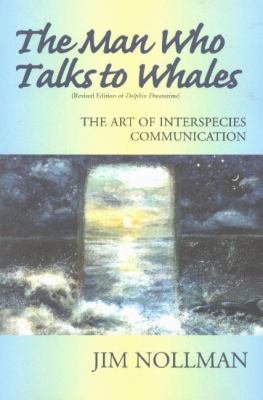
For more on Jim Nollman’s more-than-human musical collaborations, see Interspecies, a non-profit that he founded to develop wilderness programs, and among these, invite musicians, of any age and background, to get their chance to play with orcas.
Jim Nollman released Orcas’ Greatest Hits in 2026, a collection of the most meaningful musical exchanges. These improvisations stopped because of rising sound pollution as well as new regulations that prohibit using underwater speakers to project sound underwater, unless for scientific or military experiments. After these regulations, Nollman started improvising with Belugas.
For 17 years, between 1985 and 2002, Jim Nollman and friends (over 200 people) went out to record, improvise, share poetry and prayer with orcas in the Puget Sound. There, they recorded over 65 hours of improvisations, every night from 9-10 pm. They invited anyone who had “a good idea of what they wanted to say to the whales.”
Nollman explained, in an interview with Comuzzo that most often Nicola (A2) and her son (A6) would come to these sessions. (Learn more about orca populations here). Nollman and his collaborators were also were very active in orcas’ rights advocating for better protections against the ever-growing noise pollution and the devastating effects of pollution. They organized two events to commemorate the loss of specific pod members.
The underwater concert and memorial event, OrcaSing 2000, was created as an elegy for Everett (J18), a young Southern Resident orca who died shortly after his mother, Tahoma. High level of PCBs were found in his body, most likely the cause of death. (Learn more bodily porosity, about how PCBs also impact Inuit women and their babies in Astrida Neimanis Bodies of Water). Navigate to Grieving with Whales for more about how orcas and other whales have led humans to take environmental action, change laws, and protect the ocean and their inhabitants.

“[W]e should not be misled into thinking that our care and feeling for whales and their world is something subjective, emotional, and easy to discount when it comes to planning their future […] Our species has no future on this planet until we consider the flourishing of all other forms of life as part and parcel of human progress. There is a gentler, more humane way to live along with the sea. We must learn to hear the ocean’s music, so as not to play our human part too loudly.”
Why Birds Sing
Live Improvisations with humpbacks
For more transcriptions of whale songs, also check out Alexander Lieberman’s work and his recent humpback transcription.
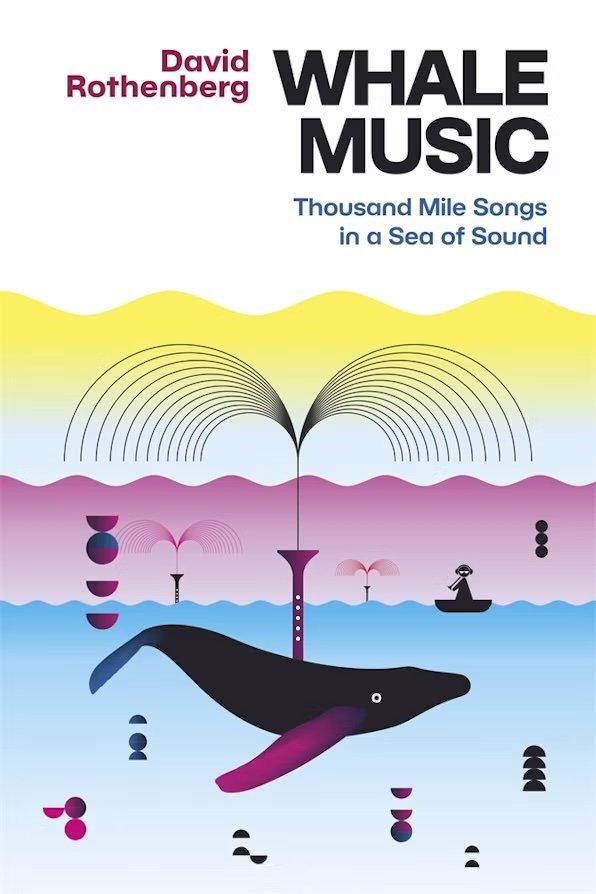
Today, whales’ songs continue to inspire musicians. In 2021 National Geographic released a special issue with a humpback whale song translated into staff notation by professor and musician David Rothenberg. For a musician, this translation offers a more legible understanding of a song, as opposed to spectrogram, which is more commonly used to study whale vocalizations.
Rothenberg regularly goes out into the ocean to find in his own words, “musicians who happen to not be humans” and records music with them. He was the first person to record live with humpbacks, through a system of technology as depicted by the visualization below. As we improvise, compose, sing, and play with them, we learn to relate, attune, and listen with, we move beyond ourselves and learn from these giant beings. The permeability of these encounters reveals the profound ways in which sonic exchanges shape our ability to relate to each other.
Live Improvisation in Maui: David Rothenberg and a Humpback Whale duetting
(Recording and image provided by David Rothenberg)
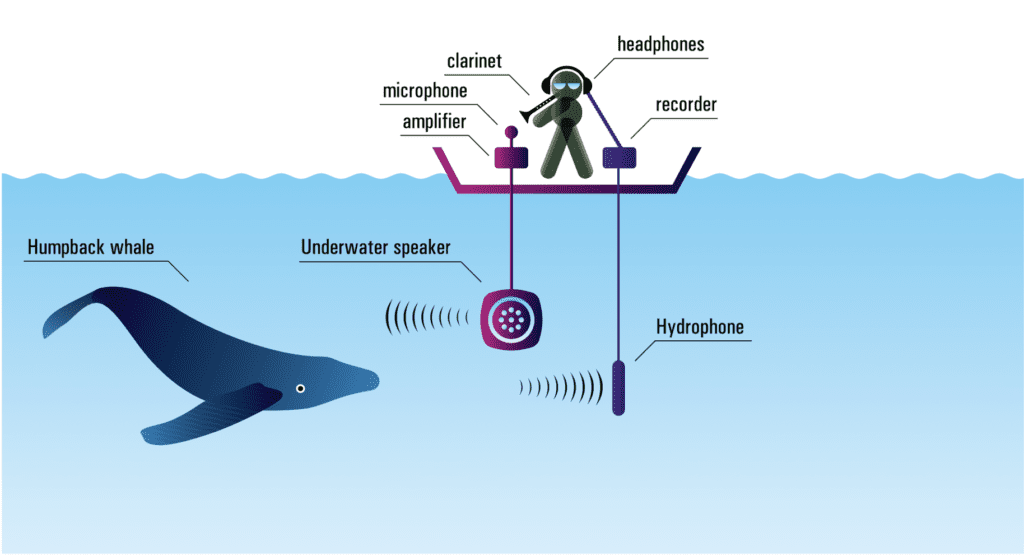
This graphic shows how to improvise live with whales, breaching the boundary between water and air through technology. The musician plays into a microphone that projects and amplifies their sound underwater through a speaker. At the same time, they use a hydrophone to pick up the sounds underwater, which they listen to through headphones. Doing so, they are able to improvise live with whales.
“It’s the whale who brings us music”
Chie Sakakibara
Whale Snow
Sonic gift exchanges between human and whale relatives
calling and singing in their whale relatives
Singing with whales is part of an ancient practice of sonic gift exchange shared among the Lummi, Iñupiat, Makah people in Turtle Island (North America), the Yuin and Mirning in Aboriginal Australia, and Māori people in Aotearoa, NZ. Whale sonic exchanges are also an important part of African American Afrofuturistic culture and practices of healing from the collective trauma of the Middle Passage.
Listen to Yuin and Dharawal Dr. Jodi Edwards, descendant of a long line of whale singers, who sings to the whales, and a humpback immediately comes and breaches. (This also continuously happens when Michaela Harrison sings to the whales, and WHAIA). And learn more about sonic gift exchanges from Jim Sykes.
Songs to the whale/Chant de la baleine
“Song to the Whales” is a project created by Corrina Bonshek & Collaborators and Oktoecho, an evening of storytelling and music that unites Māori, Aboriginal, Inuit, and other non-Aboriginal people. In 2025, the group toured to the United States to raise awareness about the continued dangers humans are causing to whales, and the need to rise and advocate for ocean protection.
The project brings together Mirning Elder whaledreaming songman Bunna Lawrie, Māori WHAIA Sonic Weaver, and Inuit throat singers Lydia Etok and Lydia Segalowtz, “in a range of immersive, enchanting atmospheres co-created by the ensemble and co-composers Katia Madisski-Warren and Corrina Bonshek. The ensemble of 11 musicians plus 5 local gong players spans East-West strings (Persian violin, oud, guitar, double bass), pulsating rhythm (gongs and drums), vocals, sounds of nature and electronics. Musically, this show occupies a third space between Indigenous, contemporary, folk, avant-garde and ambient musics.”
At their 2025 concert in NYC, WHAIA explained how she at times also embodied whales, mimicking them with accuracy and strength. Uncle Bunna Lawrie and WHAIA told stories about their journeys to meet the whales, sing to them, and listen to the whales singing back. They explained that part of this exchange happens by receiving the gifts of their singing and learning how to faithfully embody them.
Contemporary advocacy for the whales and the oceans through sonic storytelling
Uncle Bunna Lawrie shared a long story of his youth. As a young men he went out into the ocean to meet whales off the coast of the Bight. In awe, he described a humpback singing, then breaching, kissing his cheeks with ocean’s spray. In that moment, Uncle Bunna decided to spend the rest of his life spreading a message of peace through music, storytelling, and more. He started traveling across the world to inspire people to be in communion with whales and all other beings, and to feel them as part of their extended family.
“Species recovery to me is not a strategy: it’s a ceremony. it’s a restoring of the rhythm between us and the sea”
Whale whispering
Michaela Harrison, a whale whisperer, has been singing humpbacks since 2018, sharing an intimate, ancestral and musical bonds with them. She nourishes her relationship with whales, among other things, by singing with them, yearly, in Bahia and Praia do Forte, Brazil. There, she has witnessed profound exchanges between hundreds of whales gathered, and has sung with them live (read more on these encounters in her blog, and the book Interspecies Performance).
“My African ancestors who made the Middle Passage journey whispered to me of their musical and energetic exchanges with the ancestors of these whales from the slaving vessels that dredged them westward, shaping the core of this project. They planted and watered in me the memory of surviving by singing through the most terrifying terror and drawing courage and confirmation from the voices that answered them from the deep, dunking me into the zone where the miraculousness that saw them through it alive dwells, pulsing in the eternal now, accessible to us now, through water (among other channels). The song I’m singing to the whales in this video is the same song I’m singing in most of the videos from the past few years in which they are responding with undeniable engagement, appreciation, affection. It’s called “Canção Para Um Bebê Baleia (Song for A Baby Whale),” and it is a hit that gets them grooving every time.” — Michaela Harrison, “Grupo Competitivo/Come Together”
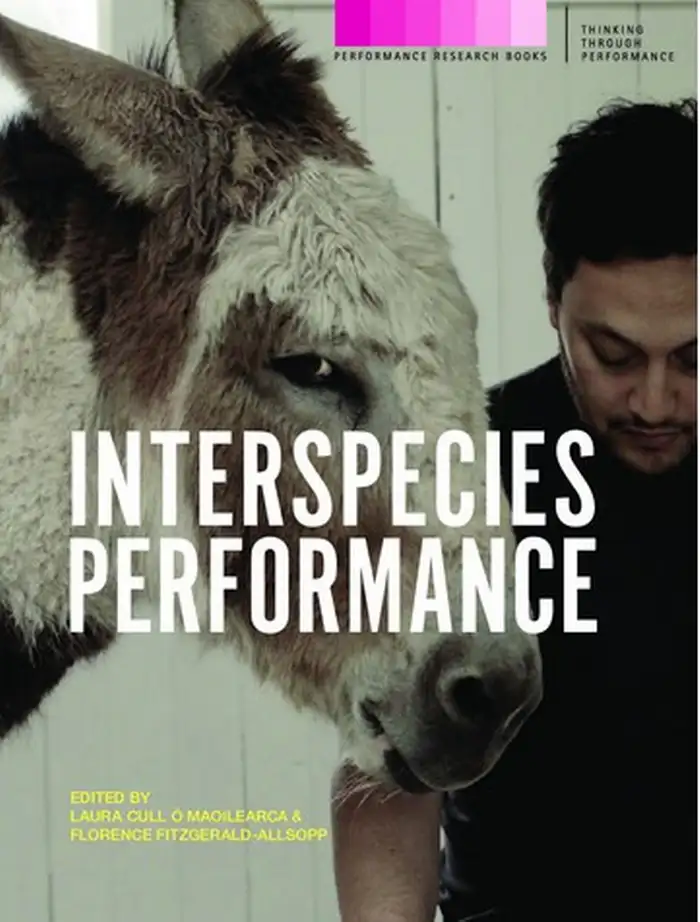
Interspecies music making also deeply intertwines with ancestral forms of knowing and connecting with more-than-humans that require not translation, but attunement and presence.
Healing in the aftermath of the middle passage
Love Wins is an almost 17 minutes long song where Harrison and humpback whales’ voices touch gently in open conversation, centering, and repeating, over and over “amour.” Harrison’s melodic lines are picked up and imitated by the singing humpbacks. From these encounters emerge important lessons for communal, multi-species resistance and memory, one that also includes humans (see also Gumbs’ Undrowned). Also check out Harrison’s Conversations with Whales, recorded in Bahia, Brazil and Listening with Whales Ancestrally for more on how these encounters intertwine with healing in the aftermath of the Middle Passage.
Love Wins is an almost 17 minutes long song where Harrison and humpback whales’ voices touch gently in open conversation, centering, and repeating, over and over “amour.” Harrison’s melodic lines are picked up and imitated by the singing humpbacks. From these encounters emerge important lessons for communal, multi-species resistance and memory, one that also includes humans (see also Gumbs’ Undrowned). Also check out Harrison’s Conversations with Whales, recorded in Bahia, Brazil and Listening with Whales Ancestrally for more on how these encounters intertwine with healing in the aftermath of the Middle Passage.
“Whale Whispering is an ancestral commission, an ode to water, a work of interspecies translation and co-creation between me, humpback whales and other cetaceans and people, a diasporic healing quest, an exploration and transmutation of the legacy of trans-Atlantic enslavement through music. Based in Praia do Forte, Brazil, it is a soundtrack for personal, communal, and global transformation, a love song for whales, for Bahia, for Earth, for the ancestors and for life. (…) I am listening to and singing with the whales to tap into the echoes of the Middle Passage that are contained within their songs, to bring forth sounds that honor Nature’s prescription for this time of reckoning and share the wisdom of water as it is relayed to me.”
“Whale Whispering Blog”
sounding pollution
Deep in the ocean, where light doesn’t reach, whales keep in touch through sound that travels across vast distances. Whether it is language, music, poetry, laughter, echolocation, prayer, or asemantic sounds—we simply don’t know—their voices reverberate in the ocean as much as ours do in our human culture.
Whale songs have become an anthem of our ability to transform when faced with the destructive power of economic greed. We are surrounded by top-down attempts to ‘sweeten the pill’ of our shared apocalyptic future, for example by assurances from politicians and corporations that green or conscious capitalism will reduce the devastating impact of colonialism.
Our inability to attribute meaning and function to humpback songs opens an important ethos of listening: in this dark space, sensemaking cannot be led only by reason and data; it also necessarily requires embodied attunement, and an outsourcing of meaning within connection and reciprocity.
a whale drowned in noise
“Echolocations,” co-composed by GRE, Drew Crawford, Pablo Galaz, and Benjamin Olive in 2025 combines both Eurological and Afrological forms of improvisation as it is grounded in the telling the story of a whale who can no longer connect with other whales because of the ever-growing cacophony in the ocean, but also the in the casual apparently autonomous and extrapolated, empty aleatory and ever-changing structure. The performance mirrors and exacerbates these histories of colonial oppression by marginalizing, engulfing, capturing, silencing, and eventually swallows the oppressed: the whale, who is the only obvious “person” in the space, but is also the one whose rights to exist are in jeopardy. The others are not clearly identified people, they are agents of oppression, or momentary friends, or yet, the peaceful environment that is home becoming a war-zone of sonic violence.
During an interview Comuzzo conducted with GRE, they said,
“I thought it was very interesting to be the only Black and fat person in the performance, also embodying the endangered species. Which probably went above most of the people who were there… the first thing that people might say is “the song is so beautiful, the whale is beautiful” and the next thing scientists do it to take out their bones… so there are parallels there to the experience of marginalized folks in academia and elsewhere, it does feel like we are drowning all the time. It has impacted the way I work, something about using my voice, using my voice in a different way that I have not been able to use because of interference of white males and their technologies.”
GRE explains that they were navigating the “getting out of the way” element, practicing an embodied experience of becoming animal, while also being aware of being the only Black queer, fat, and genderqueer performer/composers among otherwise white cis-male collaborators. This state of being was perhaps also reflected in the spatial experience: they are far removed from the other three, who are waiting at the center, and GRE moves from the margins, slowly walking to the presbytery, where the three whales and the three men wait for them.
This slow migration is accompanied by melismatic glissandos on the voice, interjected by abrupt changes at the piano, which now incorporates fast-moving scales and arpeggios in response to the ever growing and ever-closer whale-embodying-voice. Once Gre reaches the microphone, their voice transforms, as it is broadcast through four microphones into the whole cathedral, creating an immersive omnidirectional experience of sound, where the origin of the voice becomes unclear, it’s everywhere at once
This denaturalization of sound is the beginning of the end. About halfway through the piece, electromagnetic chaos fully engulfs the voice and piano, swallowing all but the dissonant clustering chords and percussive tapping strings at the piano, which create an ominous distorted feeling of desperation and unreachability.
When the cathedral becomes the ocean, and the human-person become the whale-person, the soundscapes, and the electromagnetic fields created by technologies, identities blend, merge, suffuse, collapse into each other. Echolocation asks the audience to sit with the uncomfortable, the disappearance of beauty covered up by white static noise: they are being asked to attune to the consequence of current human action, to listen to the sounds, to embody the discomfort, the rage, the fear, and most of all, the alienation. (See also listening for peace)
“Our emphasis is on one mode of decolonizing processes that insist on a different temporal framework: the slow archives. Slowing down creates a necessary space for emphasizing how knowledge is produced, circulated, contextualized, and exchanged through a series of relationships. Slowing down is about focusing differently, listening carefully, and acting ethically. It opens the possibility of seeing the intricate web of relationships formed and forged through attention to collaborative curation processes that do not default to normative structures of attribution, access, or scale.”
Kimberly Christen and Jane Anderson
“Towards Slow Archives”
SIREN: Listening to another species
(Check out Annie Lewandowski & Kyle McDonald‘s project SIREN: COMPOSERS OF THE SEA, and their shared presentation where they explain the whole project).
Machine learning offers different ways of making meaning that potentially complicate and queer those distinctions, without however moving past hierarchies of worth, which are always culturally constructed and produced (for a bit more on ML and AI and how they are used in scientific studies click here).
Some of the most meaningful discoveries in the more-than-human world have come from devoted listeners. Katy Payne used her Western classical formalist training (she studied with Donald Grout at Cornell University) to listen closely to humpbacks and discovered rhymes in the long evolving structures of their song. Half a century later, one of her close collaborators, composer Annie Lewandowski is listening to individual humpback’s variations in songs to try to learn more about the co-compositional process and more. These two approaches embody a macro/micro dialectic of opposites: the systemic drive to understand an entire species, together with the intimate experience of listening to one whale closely to know their individual expression. It also reflects how musicians and scientists are approaching the study of whale sonic exchanges.
Machine learning offers different ways of making meaning that potentially complicate and queer those distinctions, without however moving past hierarchies of worth, which are always culturally constructed and produced (for a bit more on ML and AI and how they are used in scientific studies click here).
more multispecies contemporary compositions
Multi-species composer Emily Doolittle composes alongside more-than-humans in countless different ways. She studies their sonic structures and gestures and in turn those inspire her own composition and musical language. When it comes to whales, she wrote “Social Sounds from Whales at Night” (2007), written for solo voice, and transcribed for oboe d’amore and tape; as well as “Bowhead,” a trio inspired by the vast array of sounds with which bowheads communicate.
new whalish technique
In the last five years, horn player Abigail Sanders has dedicated her studies to the development of a new notation system that is able to more faithfully reflect the complexity of humpback sounds. Here are various sample scores she wrote that hold both the spectrogram tracing of sound as well as the translation of the sounds in staff notation. She also has annotated words to indicate specific echoes that she uses as additional mnemonic tools to most accurately reproduce their sounds through the horn. As can be observed from her performance of a humpback whale song on her horn, listening to humpback whales also inspires the development of new techniques that can accurately replicate their sounds.
“We are showered every day with gifts, but they are not meant for us to keep. Their life is in their movement, the inhale and the exhale of our shared breath. Our work and our joy is to pass along the gift and to trust that what we put out into the universe will always come back.”
Robin Wall Kimmerer
Braiding Sweetgrass
Studying whale communication has historically required translation and compression: signals made into notes in the equal temperament, sounds visualized through printed and digital spectrograms, sperm whale clicks studied as language, and so on. By listening with whales at this edge, we are required to confront the limits of Western hierarchies of music and language.
For example, long structure, multiple themes, evolving over time, and complex listening practices are societally constructed as superior to simpler songs that can be easily heard, replicated, and learned. Far from being neutral, these constructed hierarchies of sound have been central to the framing of the European man as superior to all others, and his musical output, especially symphonic repertoire, as the epitome of human evolution and culture. Thus, what the history of whales and how whale songs are valued provides a lens through which to examine relations of extraction, hierarchy, and supposed evolutionary superiority, and how those are framed through the act of listening.
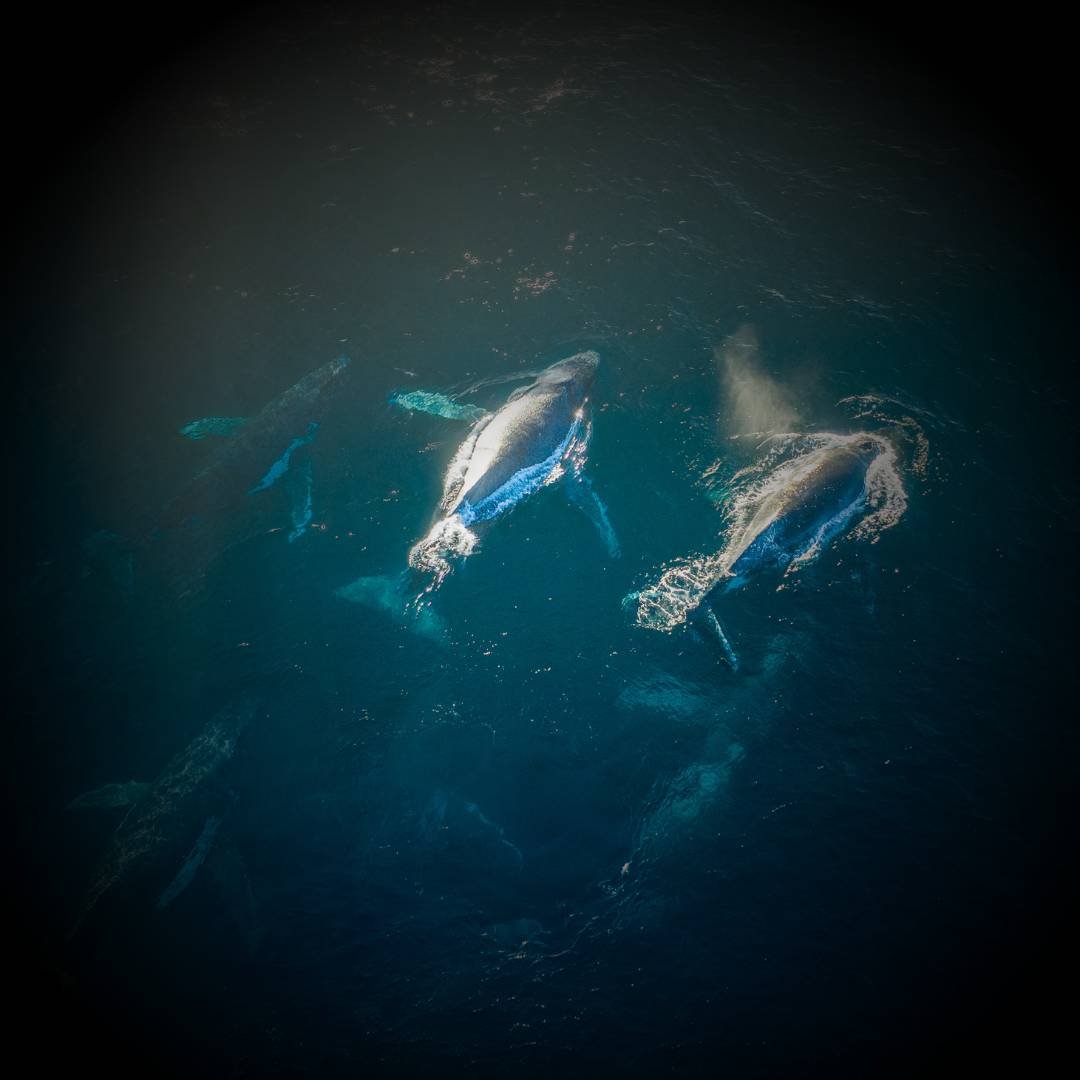
sound in water is bone-deep touch
Learn more from Alex South about humpback whales songs, their structures, the challenges of recording whales, and much more. South is also a musician and composer who works alongside whales. See his recent work here, and his interdisciplinary project “Keening—Song of the Standings” a ritual to honor and grieve the lives of stranded pilot whales in Scotland (read more about it here).
A single humpback’s song typically lasts between five and thirty minutes, averaging around fifteen, and is repeated over and over in sessions that can stretch for hours. One whale recorded in the Caribbean sang for twenty-two hours straight, surfacing only to breathe between phrases, still singing when the exhausted researcher went home. These songs evolve over time, shifting gradually, never sung in precisely the same way. Strikingly, changes spread across entire populations within a matter of months, as though a new musical trend has swept through a distant oceanic city. While the dominant narrative states that these are songs used to attract mates and advertise male reproductive fitness, we still really do not know why they sing.
However, listening with whales is also to become attuned to them and their sonic expression alongside our own physiological responses. Attunement is to enter in a space of unknowing and being changed by the experience of reaching toward a different lifeform that we can, somehow, have a deeply embodied exchange with. While sound in air is mostly processed through our ears, sound in water is touch: a physical experience of whole-bodied, bone-deep resonance. Listening and attuning thus merge underwater, and knowing becomes a mindful practice as much as an embodied one (see also listening diffractively and poetically).
Under water, it is not vision but vibration that organizes experience. Light dissolves quickly in the ocean’s depth, but sound travels with astonishing speed and fidelity, moving nearly five times faster in seawater than in air and across distances that can span entire ocean basins. Cetaceans rely on sound not simply to communicate but also to orient themselves in space, to navigate migration routes, to coordinate encounters, and to sustain social worlds that unfold largely beyond the reach of human perception.
listening and honoring pilot whales
“During the Covid-19 lockdowns, musicians Katherine Wren (viola) and Alex South (clarinets, electronics) began working together with poet Lesley Harrison, exploring their interests in animal song and the music and cultures of the North Atlantic.
The improvisation recorded for CETACEA was inspired by lines from a poem by Lesley, which in turn responded to artist Marina Rees’s exhibition centered on the bones of a pilot whale. These large delphinids are a deep-diving species that live in matrilineal societies and use complex vocalizations.
Alex, Katherine and Lesley are extremely grateful to marine biologist Michael Scheer for the field recording used in CETACEA, and to filmmakers Alexander and Nicole Gratovsky for sharing their film ‘My Pilot, Whale’ (2014) under a Creative Commons license.” — Alex South. (Also learn more about pilot whales here).
Hey! What is that sound?! And what does it MEAN?
To listen musically with whales is to resist the urge to reduce their songs to reproductive function. It is to move away from what we might call reproductive listening or the assumption that any elaborate sound must be instrumental, goal-directed, biologically efficient. Musical listening, by contrast, lingers with pattern, variation, timbre, and duration. It asks not “what is this for?” but “how does this unfold?”
Humpback songs are organized into repeating structures that feel almost Wagnerian in their scope as cyclical and seemingly unending, and they are often referred to as the “symphonies of whales,” or more metaphorically, “the symphonies of the sea.” Yet unlike Western symphonic tension and release, they often lack clear teleology. There is a circularity, a non-directionality, a sense that the song could last forever. When we attempt to transcribe them into Western notation, we immediately encounter friction: humpbacks slide between pitches and shape phrases according to a respiratory logic utterly unlike our own (check out this video to learn more about human albeit male-centered symphonies, and check out this playlist to learn more about the great variety of symphonic repertoire written by women.)
Musical listening shifts the frame. Rather than parsing each whistle for semantic content we might hear texture, rhythm, interplay. We might ask what happens when multiple whales vocalize together, such as during the peak singing season in the waters off the Hawaiian Islands each spring. We tend to isolate a single “solo” whale because it is easier for us to analyze. But what if we dared to hear them as choirs? Or, as David likes to say, communal “improvisation sessions”?
Whales singing/improvising together in Maui. Recording from David Rothenberg.
Alternative frameworks might begin elsewhere. Instead of defining music by organization, intention, or aesthetic autonomy, we might define it relationally: as patterned vibration that gathers bodies together; as sound embedded in social exchange; as a mode of attunement. Ethnomusicologists have long argued that in many cultures there is no single word that corresponds to the Western category “music” at all. There are words for song, for dance, for prayer, and for storytelling, but not for an abstract art form detachable from them.
This matters when we turn back to whales.
If we approach humpback song armed only with Eurocentric definitions that center organized sound, intentional composition, and aesthetic autonomy or “the music itself,” we risk asking the wrong questions. Is it structured like a symphony? Does it have themes? Is it meant to communicate semantic content? Is it a mating display? These are not neutral inquiries because they arise from a history that has separated art from function, composer from listener, and culture from nature.
But if we draw instead on relational or experiential definitions, music as what we experience as musical; music as vibrational sociality; music as patterned time shared among bodies – then whale song appears differently. We are less concerned with whether whales “intend” to make music and more attuned to how their sounds circulate, how they evolve across populations, how they generate shared temporal fields underwater. The question shifts from “Is this music?” to “What happens when we listen this way?”
Musical listening, in this broader sense, claims nothing about ontology but is rather a practice of attention that allows space for the coexistence of multiple epistemologies about what sound is and does. It makes room for the possibility that whales inhabit sonic worlds that are already cultural, already relational, already aesthetic, without requiring them to resemble human music.
In that light, defining music becomes less an act of classification and more an ethical gesture. Rather than securing the borders of a European concept, we let the ocean trouble them. We allow humpback temporality in its vast, slow arcs and cyclical returns to stretch our sense of musical time. We allow underwater acoustics where sound travels faster, farther, and through the body to unsettle terrestrial assumptions about how music is felt.
The point, then, is not to declare that whale song fits our definition of music. It is to recognize that our definitions are partial, situated, and historically contingent, and that listening musically to whales may require loosening them. In doing so, we do not merely expand the category of music but we expand our capacity to hear.
“With the ears of a musician I listened to and marvelled at the rich and varied sounds made by humpbacks in their songs, structured in some ways so similarly to the human musics I have loved and performed for much of my life, in other ways so very differently. With my ears open, I played with field recordings, where ‘playing’ signifies both improvising on my instruments in mimetic, complementary and contrastive ways, and creatively experimenting with selected sections as transcriptions or audio clips, reorganizing, transforming or layering them in order to re-compose new multispecies works.”
“Cetacean Citations”
An interactive timeline of the many ways humans listened to and with whales, and how that changed environmental policies, laws, and culture.
This ever-growing interactive timeline traces the many ways humans have listened to and with whales and how those acts of listening reshape environmental law, scientific knowledge, music, and more broadly cultural imagination. Move through the timeline to explore pivotal recordings, performances, and political movements. Scroll and click any entry to listen, watch, and explore further.
to be continued…
Do you know a musician, composer, recording, performance, or sonic encounter with whales? Add them to the current!
Did you catch a mistake? Report it for a krill!
Listening with Whales is a living, growing digital commons. Sing it out: share this page!