About the project
Written by Marie Comuzzo
How to cite this page: Comuzzo, Marie. “About the Project,” Listening With Whales, 20 September 2026, https://listeningwithwhales.org/about-the-project.
Origin Story
Deep in the ocean, where light doesn’t reach, whales keep in touch through sound that travels through vast distances. Whether it is language, music, poetry, laughter, echolocation, prayer, or asemantic sounds—we simply don’t know—their voices reverberate in the ocean as much as ours do in our human cultures. We use, manipulate, rethink, transform, mix these sounds and use them in countless ways: from evocating awe for the more-than-human world, to bringing us to rest, or to communicate the urgency to change our ways, whale songs have become an anthem of our ability to transform when faced with the destructive power of economic greed.
Listening with Whales builds on doctoral research on how sound mediates the relationship between humans and whales, and my fieldwork in Mo’orea, Tahiti where a dead humpback calf was perceived, at the same time, as a relative and ancestor, a scientific specimen, and an economical hazard for ecotourism. Since then, I have been working on creating bridges between human people who have disparate aims, cosmological understandings, and pursuit, in attempts to listen more closely with each other and with whales. The way we care differently for them across cultures, disciplines, and countries, but also how they reciprocate our gifts of connections. Ultimately this project aims to support peace building between humans, and also humans and more-than-humans, within scientific, Indigenous+, artistic, legal contexts, and conservation practices.
This research is guided by related core questions: who do we listen with? Whose voices, and which bodies, do we recognize as meaningful producers of culture? With the support of an ACLS/Mellon Dissertation Innovation Fellowship as well as mentors, colleagues, friends, whales, and other more-than-humans, I brought to life Listening with Whales in this format. While dissertations often are read only by specialized colleagues, I was hoping for our research to reach the public.
I initially framed and invited contribution through specific disciplinary listening categories. However, the research continually undid these boundaries. It showed instead how scientists listen musically; musicians listen scientifically, artistically, and ancestrally. Ancestral listening can also be genetic, historical, in is often musical, and ecological. Grief emerged as a through-line across all categories of listening.
Just like a calf does, this digital commons is continuing to grow, change, and include more and more material as my research advances and more people join and as we learn more about the incredibly different and beautiful ways we humans care for and with whales, and each other, across the world.
Listening with Whales is primarily written for those who are curious to know more about whales, as well as humans listening with them, but don’t necessarily want to read long dissertations or scholarly books. Initially, I was thinking to simply publish the chapters of my dissertation in open access, but reading across and connecting with many different people made it clear that for research to be accessible, its form also needs to be accessible.
I invite you to explore this website linearly, diffractively, and most of all—chaotically. While categories of listening create boundaries and order, in reality, those who listen musically, sometimes also listen scientifically, artistically, and historically. Those listening ancestrally, most often listen musically and poetically, but then also genetically and through mourning. Grieving with whales is indeed a link among most forms of listening, as it is the experience of losing a whale or entire pod that which leads many people to change. My co-author and I laid out this process and called this form of change that comes from grieving with, “erosic attuning.” Because whales live in one ocean, as we live in one planet, they migrate and connect across many different cultures. If you may want to explore their presence, all at once, you may listen globally.
Because these are so interconnected, you will also encounter repetitions, and this is intentional. This project does resist linearity and leans into diffraction: EVERYTHING EVERYWHERE ALL AT ONCE.
Last but not least, this project is FAR from perfect, so if you find a mistake, please report it here. I will address it as soon as possible, and I really appreciate your motivation to help making this digital commons a better place. If you’d like to add to LWW, please fill out this form, or send me an email. I am excited to hear from you!
Have FUN exploring, and THANK YOU FOR ALL THE FISH, and KRILL.
“‘Turning toward’ (Tikkun) in Fackenheim’s philosophy, is an ethics of motion toward encounter, a willingness to situate one’s self so as to be available to the call of others. It is a willingness toward dialogue, a willingness toward responsibility, a choice for encounter and response, a turning toward rather than a turning away.”
Dr. Deborah Bird Rose
“Wild Dog Dreaming,”
Positionality, Ethics, and Values
Listening with Whales beings from an understanding of whales as participants in social, musical, ecological, artistic, ancestral and poetic culture. It seeks to create a space in which different worldviews may coexist without requiring them to merge. Contributors to Listening with Whales write, create, and practice from their unique histories, ancestries, disciplines, communities, and locations. This commons is a site where we hold our differences through a commitment to listening across, practicing intellectual generosity, holding discomfort, and and being care-full in relation with one another.
As we center collaboration, reciprocity, and accountability, we particularly seek to make space for Indigenous+, Black, brown, queer, trans, disabled, feminist, and other voices historically marginalized within dominant institutions of knowledge production. This digital commons also centers First Nations, Indigenous, and Aboriginal knowledge, sciences, and longstanding kinship with whales and oceans. While the LWW contributors are attentive to how Eurocentric and other forms of discrimination impact Black, Latinx, Indigenous+, and more-than-human people, we are aware of the limitations imposed by our own positionalities, which shape both what we are able to perceive and what we may remain unable to see.
Some of us strive to take material, real, actions to create spaces for Black, brown, and Indigenous+ knowledges to be recognized formally in the many spaces where these knowledges already shape culture but are not formally recognized. Listening with Whales values scientific research but rejects the assumption that Western science is the legitimate route to marine mammal knowledge. Instead, it allows for a multiplicity of knowledges to converge without resolving their differences. Scientific knowledge is never produced from a position outside history, institutions, values, fundings, and relationships.
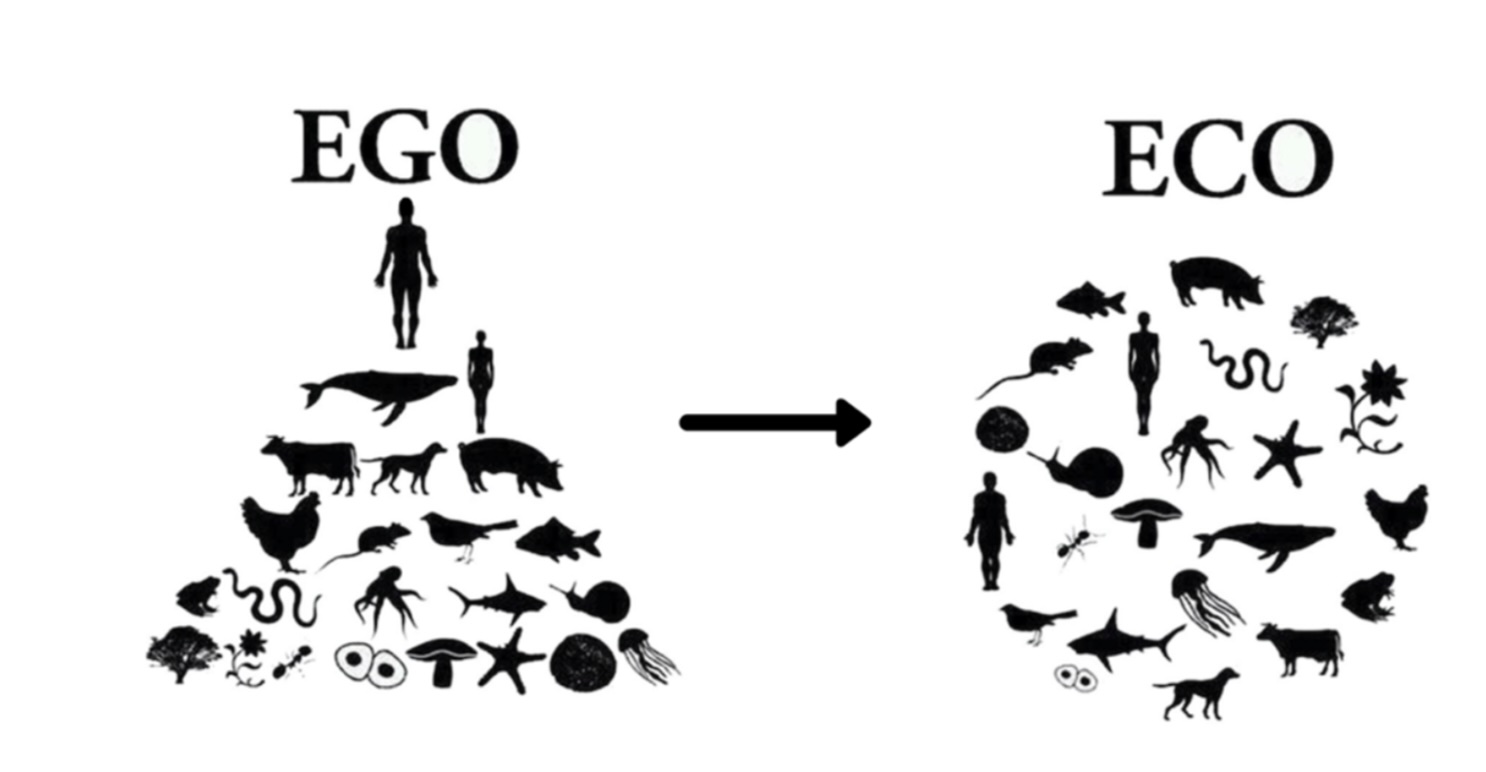
We also challenge the positioning of Western scientific knowledge above Indigenous, ancestral, artistic, musical, poetic, embodied, or other ways of knowing. Instead, we are interested in creating conditions in which encounters with one another can happen without reinforcing established epistemological hierarchies and assumptions about who has the right to translate, validate, or establish knowledge. As a collective we also challenge human supremacy and speciesist hierarchical positioning of more-than-humans as inferior. We relate to whales as active participants in culture: as they live, they touch and move humans, influencing our culture, law, art, music, science, spirituality, literature, and activism.
Industrial and colonial whaling killed many peoples’ elders, deprived the oceans from their ecological balance, and radically reshaped them. The Atlantic Ocean also holds the deaths of almost two million African people, out of the 12.5 millions who were violently displaced through the transatlantic slave trade and the Middle Passage. These histories are embedded in a colonial culture built on violent extraction and the commodification of lives—humans and more-than—in pursuit of relentless profit, which also displaced countless First Nations, Indigenous, and Aboriginal peoples. Many of the lands and oceans in which marine research, conservation, ecotourism, and environmental governance take place, remain sites that are colonized. Some of us are also taking material action to support Indigenous, First Nation, and Aboriginal governance and food sovereignty. Others are working on the continued healing from the collective trauma of the Middle Passage and commercial whaling. And yet others, are focusing on advancing more-than-human rights, building environmental peace, and create a culture built on reciprocal attunement.
This project is supported predominantly by Western academic institution and relies heavily on volunteered work. It is woven and curated by me, a white Italo-German scholar working within a U.S. institution. This shapes who I encounter, what I am able to recognize and see, which access I am granted or denied, and what may be visible or remain invisible to me. I understand positionality as ongoing practice of learning and accountability, where safety and trust need to be continuously nourished and practiced in relationship. I listen for my mistakes and work on changing inherited beliefs and ideologies. I am attentive to how sometimes institutional power shapes and contrast my personal intention and how structural violence persist even when I am personally working against it.
For me, Listening with Whales is also a call to take tangible and courageous action in defense of our people, to show up against racist, classist, sexists, ableist, and speciests forms of discrimination, and work hard to be a good comrade. As a dear loved one has taught me “systems are made by people, and systems, just like people, can change.” I also often return to what Ursula K. Le Guin said: “we live in capitalism. Its power seems inescapable. But then, so did the divine right of kings,”
I hope this commons can contribute, however incompletely, to form relations grounded in reciprocity, kinship, and shared responsibility, toward rejecting some of the harmful ways we have inherited, and moving towards creating something more beautiful, connected, and respectful across species, ways of knowing, and human and more-than-human lives.
“A bay is a noun only if water is dead. When bay is a noun, it is defined by humans, trapped between its shores and contained by the word. But the verb wiikwegamaa—to be a bay—releases the water from bondage and lets it live. “To be a bay” holds the wonder that, for this moment, the living water has decided to shelter itself between these shores, conversing with cedar roots and a flock of baby mergansers. Because it could do otherwise—become a stream or an ocean or a waterfall, and there are verbs for that, too. To be a hill, to be a sandy beach, to be a Saturday, all are possible verbs in a world where everything is alive. Water, land, and even a day, the language a mirror for seeing the animacy of the world, the life that pulses through all things, through pines and nuthatches and mushrooms. This is the language I hear in the woods; this is the language that lets us speak of what wells up all around us.[…]This is the grammar of animacy.”
Dr. Robin Wall Kimmerer
Braiding Sweetgrass
A note on pronouns
Language shapes how we think, how we encounter one another, and how we make sense of the world. Robin Wall Kimmerer teaches us that “in Native ways of knowing, human people are often referred to as ‘the younger brothers of Creation.’ … humans have the least experience with how to live and thus the most to learn—we must look to our teachers among the other species for guidance.” In this spirit, she warns us that the English pronoun “it” holds a profound epistemic power, de-animates and objectifying the world around us.
When a tree, a whale, a river, or a squirrel becomes a “it,” they become something we can act upon without honoring our shared roles. Kimmerer invites us to reconsider using the habitual pronoun “it” and to imagine forms of language that better reflect kinship and relation with more-than-humans.
Within Listening with Whales, I therefore encourage the use of they/them pronouns for individual more-than-human beings, including oceans, trees, and whales. Using they/them also de-prioritizes the gender in the encounter while affirming the animacy and subjecthood of the more-than-human (and human) person.
Choosing “they/them” over “it” when referring to the ocean, a whale, or another more-than-human, is a small but meaningful practice of attention, care, and attunement: a practice of re-animating the world that surrounds us and placing ourselves back in relationship with them.
“My hope, my grand poetic intervention here is to move from identification, also known as that process through which we say what is what, like which dolphin is that over there and what are its properties, to identification, that process through which we expand our empathy and the boundaries of who we are become more fluid, because we identify with the experience of someone different, maybe someone of a whole different so-called species.”
Dr. Alexis Pauline Gumbs
Undrowned
acknowledgments
Listening with Whales wouldn’t exist without the research, commitment, support, and care of a globally scattered community of whalish—and-not-so-whalish—people. As this project continues to grow, I hope it will continue to bring together people who care deeply about whales, about the ocean, and about creating a future in which we are accountable to one another, including our more-than-human kin.
I want to begin by thanking the whales we have encountered and who have, in one way or another, shaped our lives. I am grateful to all the contributors to Listening with Whales, who are listed here. Your research, writing, art, music, teachings, and other forms of scholarly, creative, spiritual, and intellectual, work have made this digital commons possible. I am deeply grateful for the trust with which you have shared your work, for your interest in co-creating this space, and for your commitment to making your work accessible to a broader public.
Without the support of my academic advisor, Bradford Garvey, I wouldn’t even be studying whales. Thank you for supporting this project from its very incipit; for believing in it so wholeheartedly; for knowing so much about whales, trees, and other more-than-humans despite being an ethnomusicologist. You entirely transformed my idea of what an ethno/musicologist can and should be, and I am so grateful for that perspective. Thank you also for the endless conversations; for all the Iron Goddess and vegetably green tea; and for teaching me so much, so widely, and so generously.
And to Marianna Ritchey: thank you for helping me grow into the scholar and person I am, for teaching me how to think deeply, broadly, and critically, and for continually encouraging me to follow the questions and pursuits that matter most to me. And thank you, too, for co-writing with me: it continues to be one of my most cherished experiences in life, and one through which I have grown enormously.
I am very grateful to Michaela Harrison for providing guidance and mentoring through long conversations, for the shared singing, and for the ancestral whale whispering collaborations. And to David Rothenberg for connecting me with many whalish people, for sharing resources openly, and welcome me in many more-than-human musicking conversations. I am also grateful to the many people who have supported me my curiosity, research, and activism, shared their knowledge and experience, and generously responded to my questions, and read drafts of pages, articles, and more. Among them, I especially want to thank, Alex South, Finley Woodson-Gammon, Miriam Piilonen, Rachel Mundy, Aaron Allen, Abigail Sanders, Evan McCarthy, Liz Fox, Marjorie Rubright, Scott and Hella McVay, and Peter Tyack; as well as my colleagues in the Indigenous+ Representation group, with particular thanks to Éadin O’Mahoney and Jodi Edwards. I am also deeply grateful to Miriam Liske-Doorandish for the musicking; to Katerina, Ale, Robin, and Kay for the holding and healing; and to Nelly.
This work wouldn’t be possible without the help of fantastic librarians, including Maric Kramer, Alexis Cooper, Jeff Goodhind, Kavin Martyn, and Lisa Zeidenberg. I am also grateful to Grace Wan for supporting this project for a whole summer.
I am also deeply thankful to my family and close friends who have accompanied and sustained me throughout this work, especially Hannah, Milo, and Mirjam Brückner, Anna Valcour, Billy Fischer; Sue, Larry, and Zoë Ramin; Teresa Chahine, Justin Pegnataro, Sarah Tootill, and Zenobia.
Thank you to Brandeis University, the Mandel Center, the Biome Trust, the Kinney Center for Interdisciplinary Renaissance Studies, the Ocean Alliance, the American Council of Learned Societies (ACLS) and the Mellon Foundation for supporting my research and helping make this project possible.
Finally, I am thankful to my multispecies household; to the many oaks and other trees who have held me in my thinking, listening, and attuning; to the ocean for gifting me songs and holding me in their embrace; to the whales who have inspired me in so many different ways; and to the many other beings who make life more colorful, musical, and fun.
Wanna add to the cultural history of human and whale connections? Join the current!
Did you catch a mistake? Report it for a krill!
Listening with Whales is a living, growing digital commons. Sing it out!