Written by Finley Woodson-Gammon
How to cite this page: Woodson-Gammon, Finley. “Bowhead Whales,” Listening With Whales, 19 September 2026, https://listeningwithwhales.org/bowhead-whales. Photo credit: Vicki Beaver, Alaska Fisheries Science Center, NOAA FIsheries, Marine Mammal Permit#14245.

In the polar night, bowhead singing is shaped by ice.
Oceanographer Kate Stafford and colleagues, who study the ways these whales are constantly innovating their songs, have described bowheads as remarkable listeners, capable of working the creaks and groans and growling of glaciers directly into their songs — as well as the calls of other species (Stafford 2022; Stafford et al 2018; Rendell and Whitehead 2001; Clark 1990).
Stafford et al. recorded over 184 distinct song types across a four-year period, a rate of innovation that seems to surpass the only other baleen whale known to sing with such fervor, the humpback whale. Distinct bowhead populations in the western and eastern Arctic regions have been separated from each other for millennia due to the extreme environment; unlike humpback whales, cross-population cultural transmission of songs has not been possible until recently, due to the rapid melting of polar ice.
Songs change with incredible speed among these groups (Stafford 2022). Researchers like Stafford and Llbobet et al (2026) believe this may indicate that the whales may be listening to sources beyond their own for song transmission and experimentation. Reflecting the voices of the ice, the geophony, the strands of vocality borrowed from other marine residents, bowhead songs are sung archives of how the whales experience and choose to listen to their environment. But an ice-packed, human-quiet Arctic is a quickly fading acoustic world: less ice means more wind and wave noise the ice used to muffle, more engine noise from ships reaching waters once closed to them, and new species’ calls seeping in behind the melt.
bodies and kinship
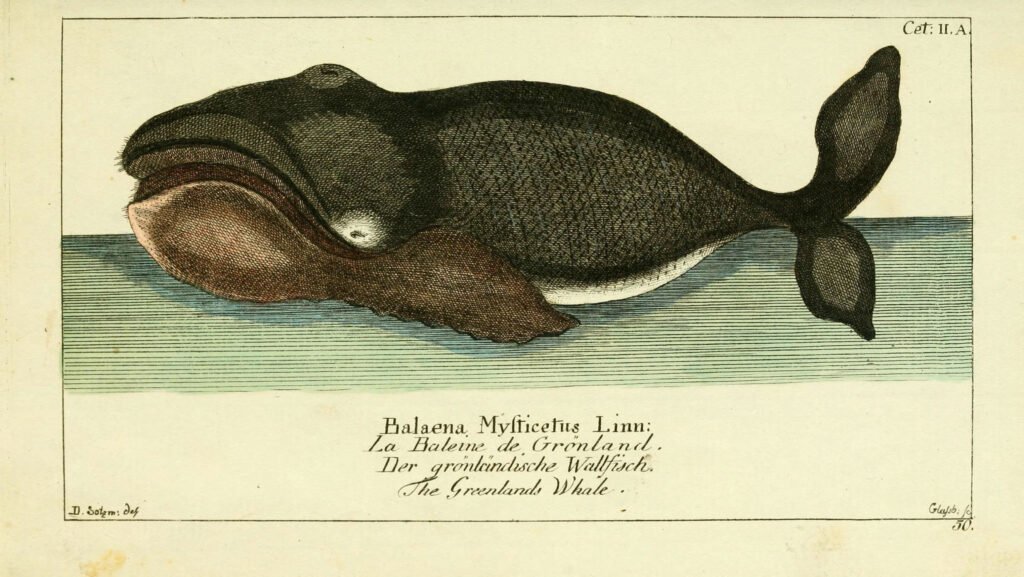
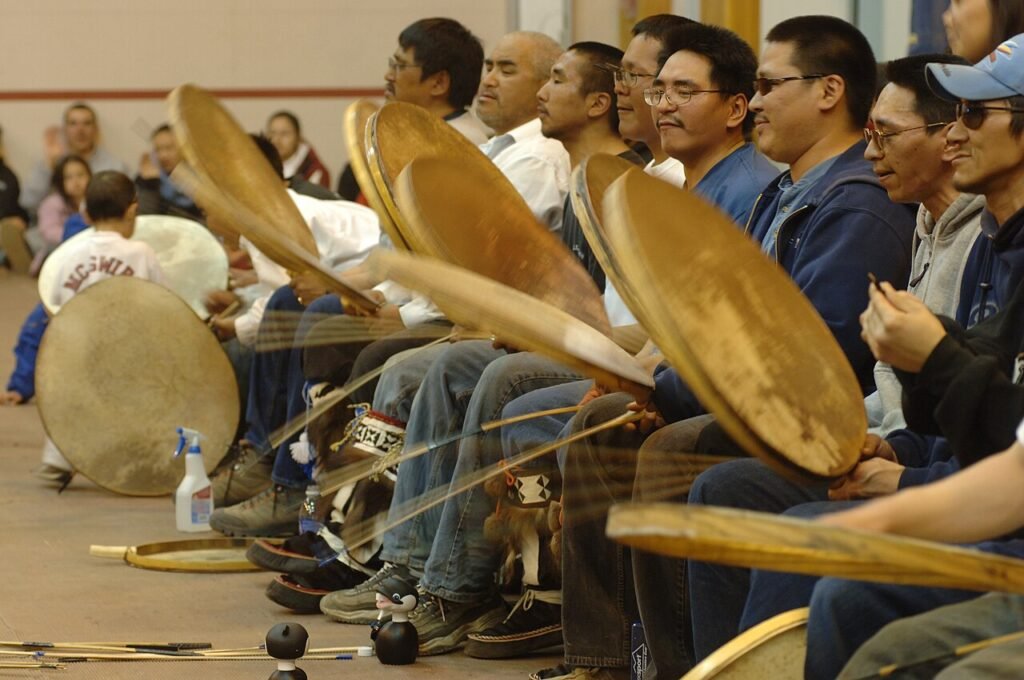
Bodenhorn later developed the idea in a 1988 essay memorably titled “Whales, Souls, Children, and Other Things That Are Good to Share,” arguing that whales are woven into the same web of obligation as kinship itself, as beings capable of noticing who deserves them. Across Arctic whaling cultures more broadly, a whale treated with proper respect was thought willing to be reborn and caught again, ensuring the humans’ survival. One mistreated would not return.
bowheads are stout, and their most distinctive feature is a massive bow-curved skull
The ice that shapes their songs shapes their bodies too: bowheads are stout, and their most distinctive feature is a massive bow-curved skull which they use to blast through thick Arctic sea ice to breathe. They carry the thickest blubber of any whale, over a foot in places, built for a life that, unlike a gray whale’s or a humpback’s, never includes time spent in warm water.
The Cambridge anthropologist Barbara Bodenhorn has spent her career working out what the relationship between whale and the human societies who have traditionally relied upon it to survive specifically asks of the humans involved. Early in her fieldwork, an Iñupiat whaler told her that a landed whale gives themself to the wife of a captain who has treated others generously and kindly.
whale elders

While studying with an Iñupiat whaling crew near Utqiaġvik, Alaska, the biologist Craig George once ran his knife into an old scar on a landed whale and felt it stumble across something solid. He cut deeper and pulled out a harpoon point of a kind not seen since the late 1800s. It wasn’t the only one: other hunters had found an ivory harpoon head near Wainwright, and blades of stone and slate lodged in whale blubber like ancient shrapnel. George, who went on to study bowheads for more than four decades before his death in 2023, sent tissue from dozens of whale eyes to a geochemist at the Scripps Institution of Oceanography, who in turn used amino-acid aging to estimate how old each whale had been. Several came back 150-200 years old at the time of their death. The Iñupiat have already known this for many generations: a bowhead’s lifespan runs to roughly twice a human person’s own.
What a lifespan like that means for one’s relationship with a single place is hard for any shorter-lived species to picture. A bowhead calf born in the Beaufort Sea might still be swimming those same waters when its own great-great-grandchildren are doing the same, a continuous witness to a stretch of ocean across a span that outlasts most human family memory, let alone written record.
Iñupiat, Yupik, Chukchi, and Inuit whaling communities
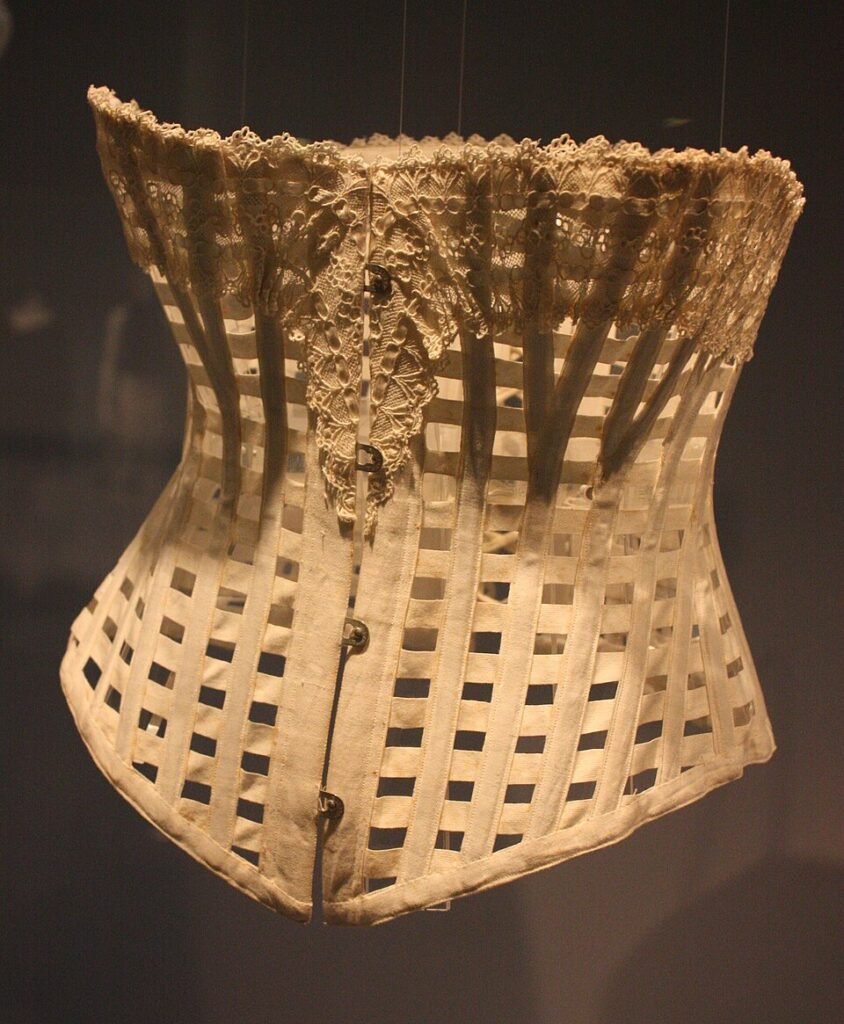
But nineteenth-century commercial whalers hunted bowheads for baleen, sold as “whalebone” for corsets and buggy whips, and for oil, driving the Bering-Chukchi-Beaufort population from an estimated 10,000-plus down to a few thousand, or fewer by some counts, by the time large-scale whaling ended in the early 1900s. Read also listening with whales historically for more on this.
the oldest bowhead we know of was 211 years old.
For the Iñupiat, and for Yupik, Chukchi, and Inuit whaling communities stretching from Siberia to Canada, this perpetuity is the foundation of a rapport. Many Iñupiat describe themselves as the People of the Whales — an identity central to Whale Snow (2020), the geographer Chie Sakakibara‘s ethnography of Iñupiat whaling and climate change. (Certain snowfalls after a successful hunt are known in Iñupiat families as “whale snow,” understood as something connected to the whale’s own spirit.)
Sakakibara frames whaling as an ongoing reciprocal exchange between two communities, human and cetacean.

Managed since through subsistence quotas that Alaska Native communities negotiate for themselves through the Alaska Eskimo Whaling Commission and the International Whaling Commission, the population has rebuilt past 16,000 and seems to be climbing.
A warming, less predictable Arctic is now the newer threat to the sea ice bowheads depend on and, Sakakibara argues, to the whole cultural rhythm shared by the whales and humans in these regions.
by Chie Sakakibara
Sounding Bowheads
Multi-species composer Emily Doolittle’s whalish compositions include “Social Sounds from Whales at Night” (2007), written for solo voice, and transcribed for oboe d’amore and tape and “Bowhead,” a trio inspired by the vast array of sounds with which bowheads
Below, a video recorded as part of a lecture/workshop taught by Finley Woodson-Gammon and Marie Comuzzo at the University of Nevada, Reno in November 2025. As part of our workshop, titled “What Does it Mean to Listen Musically to Whales? Notation, Embodiment, and Collective Improvisation,” we asked students to listen to different species of whales for 10 minutes and then try to mimic and embody their sounds/songs through a collective improvisation. This was the first take of the group who sounded the bowheads based on these recordings.
Wanna add to the cultural history of bowhead whales? Join the current!
Did you catch a mistake? Report it for a krill!
Listening with Whales is a living, growing digital commons. Jazz it out!