
About Listening with Whales
Listening With Whales is a multi-layered digital project that invites people to explore whale and other cetaceans – including their songs, calls, and echolocation clicks – as both a site of knowledge and a call to reimagine human-ocean relations. This online platform functions simultaneously as a research tool and a community meeting ground where multiple ways of knowing converge, including scientific analysis (such as song codings), artistic response (art and music made with/in response to whale songs), ethnographic reflection from field work, and public engagement (such as art installations, crowd funding, and exhibitions). In doing so, we will also endorse calls from within and outside biology to acknowledge that whale and dolphin vocal behaviours potentially have multiple functions and motivations that do not necessarily fit within dominant heteronormative or reprosexual paradigms. This project and collective are also a call to action: to listen differently across disciplinary and cultural divides in order to build a sonic multispecies commons where whales are kin and co-catalysts for change. While we hope that this project will contribute to our collective understanding of why whales sing, and why meanings associated with specific vocalizations, we are ultimately co-creating this space to inspire humans to become better animals, and to learn how to coexist and co-celebrate in reciprocity: towards perceiving life and nature not as extractive resources but as gifts to take care of as we collectively work together to create a better future. Because this is foremost a platform we are building for our community, we want to be in conversation from the beginning of the project and co-create within broad interdisciplinary relationships.
About Us
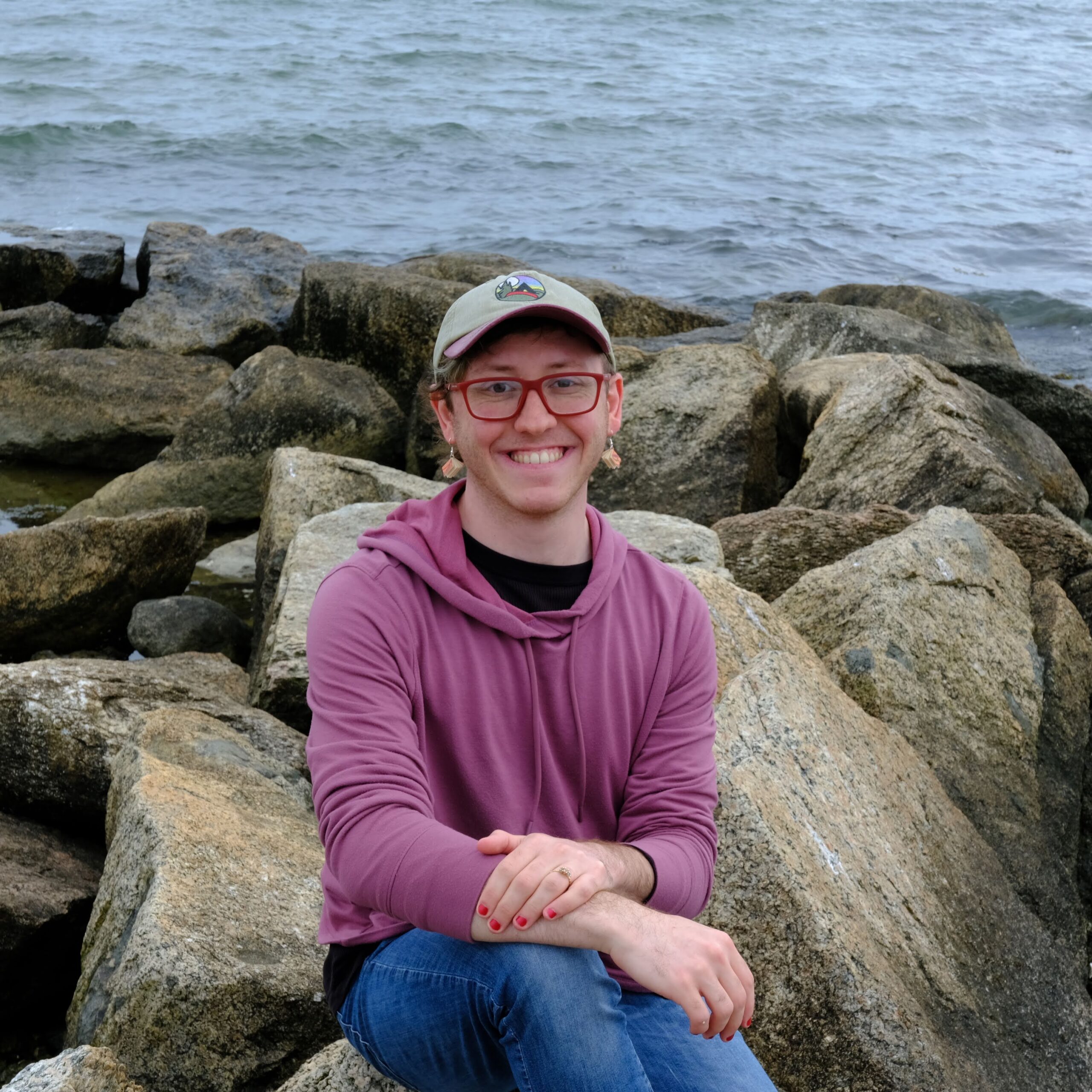
Max Chervin Bridge • Historian
They/Them • Author of Listening with Whales Historically
Max is a PhD Candidate in History at Brown University. Their research focuses on whales, dolphins, and the sensory history of oceanic environments. Their dissertation – “Oceanic Listening: Sound, Cetaceans, and the History of Sensory Environments” – explores how sound has mediated human-cetacean relationships over the past 200 years across extractive, scientific, and aesthetic contexts. “Oceanic Listening” spans histories of whaling labor, dolphin captivity and echolocation research, relationships between marine bioacoustics and U.S. imperialism, and representations of whale song in popular culture. They have published research on the history of fish bioacoustics and ocean noise pollution in Environmental History and on the history of humpback whale song science in Historical Studies in the Natural Sciences. They are also interested in disability studies and the environmental history of disability activism in the 20th-century United States.
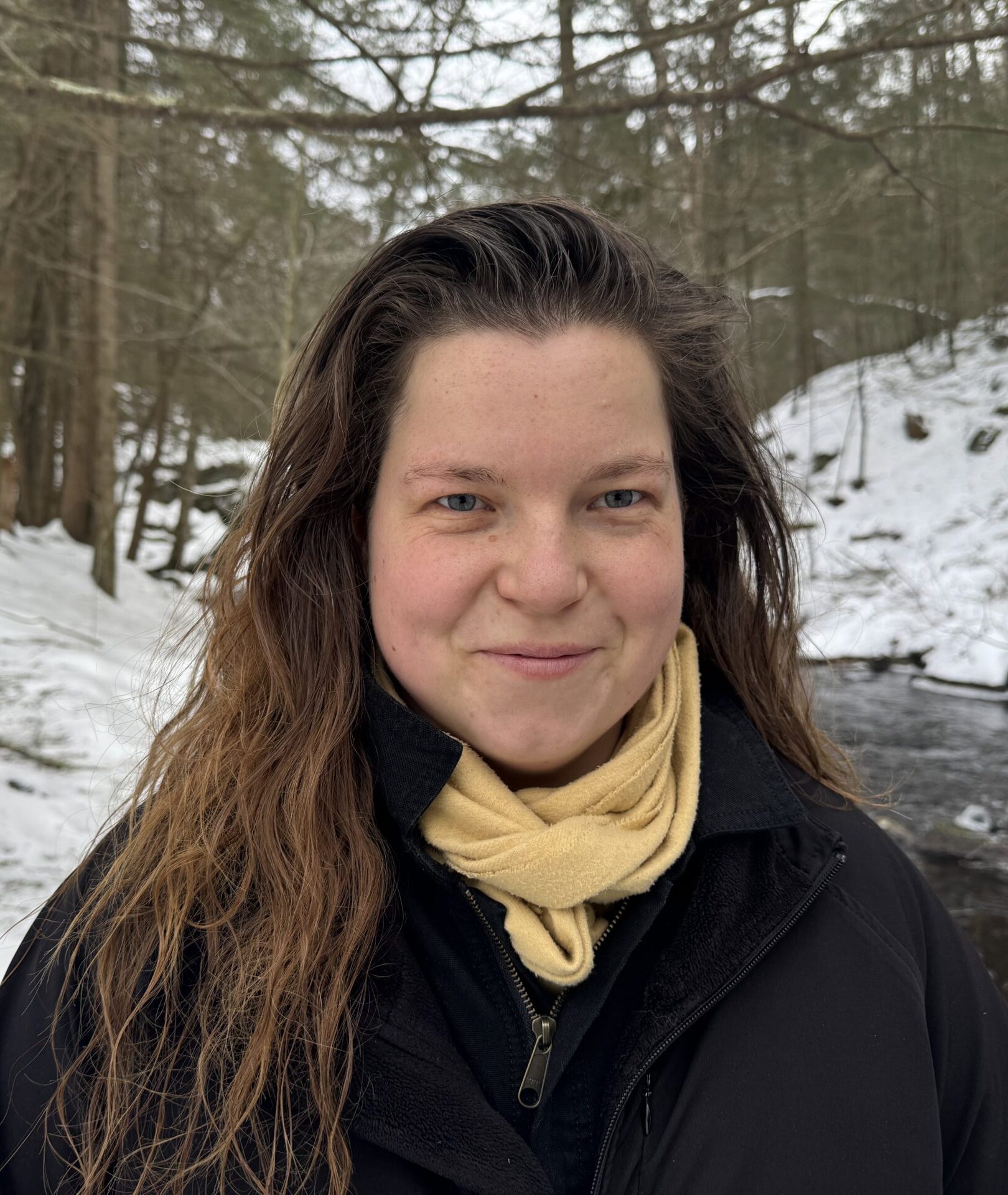
Marie Comuzzo • Musicologist • Ecofeminist • Musician • Activist
She/They • Project Lead • Co-author • Co-creator of The Globe & The full immersive exeprience
Marie Comuzzo is a musicologist, environmental activist, and multimedia artist. They are currently pursuing an interdisciplinary dissertation at Brandeis University, where they are exploring how sound mediates the relationship between humans and whales for which they were awarded a Mellon/ACLS Dissertation Innovation Fellowship. Listening with Whales is part of it and is a collaboration between many different scholars, scientists, activists, and creators who care deeply about whales. Drawing on marine bioacoustics, gender studies, First Nations epistemologies, and environmental humanities, Comuzzo investigates how humans listen to and with whales across disciplines, and how these practices generate ethical and ecological consequences. They also hold a Master’s in Musicology from the University of Massachusetts, Amherst, and a Master’s in Women’s, Gender, and Sexuality Studies from Brandeis University.
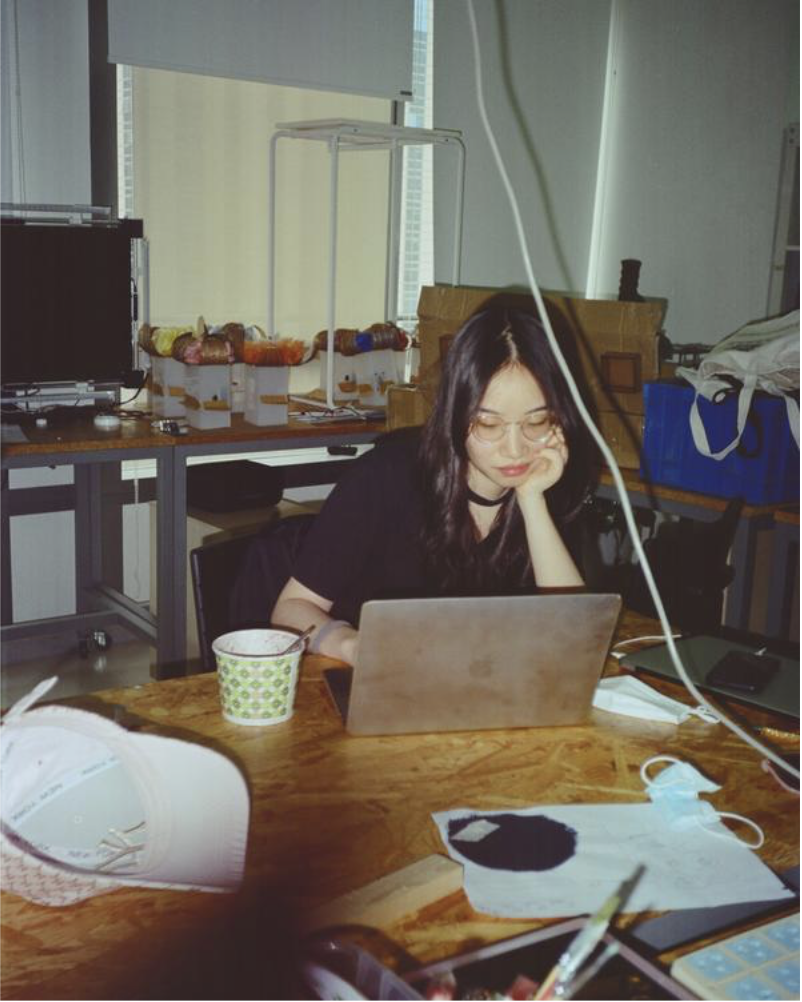
Skye Xinyi Gao • Creative technologist • Experience Designer • Interdisciplinary Artist.
She/Her • Website Developer • Co-creator and lead of the Virtual Immersive Experience & The Globe
Skye (Xinyi) Gao is a creative technologist, designer, and multi-disciplinary artist currently based in Boston, MA. Her work spans across interactive experience, multimedia installations, creative computing, and bio-inspired design. Driven by a deep engagement with technology, Skye finds herself at the nexus of human, artificial, and natural intelligence. Her most recent research interest resides in how advanced computational systems can reshape human experiences and understanding from a more-than-human perspective. Beyond her speculative explorations, Skye also addresses pressing social and cultural phenomena, reflecting on the juxtaposition of memory, life, death in the digital era and its implications for (post) human conditions. Skye holds a Master of Design Studies (MDes) degree at Harvard Graduate of Design with a concentration in medium/technology and a B.Sc in Interactive Media Arts from NYU Shanghai.
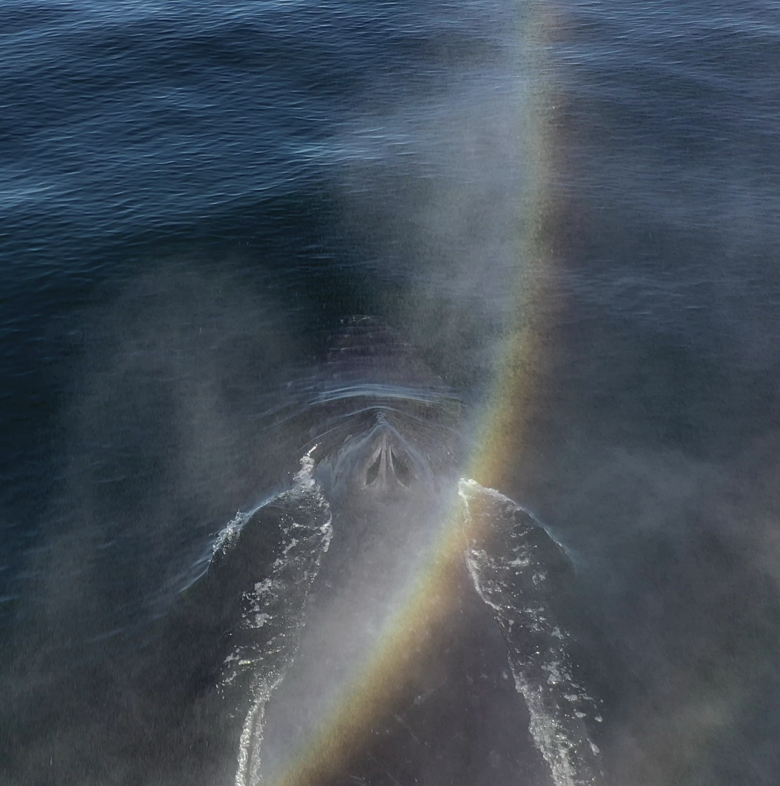
Éadin O’Mahony • Ecologist • Conservation Biologist • Wildlife Geneticist
She/Her • Co-author of Listening with Whales Scientifically
Dr. Éadin O’Mahony is a marine mammal ecologist working at the intersections of science, culture, and care. Her research explores how we might listen differently to whales—through breath, behaviour, genomes, and relationships—by developing non-invasive methods such as drone-based blow sampling. Working across the North Atlantic and Northeast Pacific, she collaborates closely with coastal and Indigenous communities to support more just and inclusive forms of ocean stewardship. Éadin is interested in whales as social, cultural, and communicative beings, and in how scientific listening can be reshaped through humility, reciprocity, and collaboration beyond academia.
Steven Mentz • Swimmer • Poet • Blue Humanities Critic
He/Him • Co-author of Listening with Whales Poetically
Steven Mentz is Professor of English at St. John’s University in New York City. An open-water swimmer, poet, writer, and water-activist, he has written numerous scholarly books, including An Introduction to the Blue Humanities (2023), Ocean (2020), and At the Bottom of Shakespeare’s Ocean (2009). Books of poetry include Sailing without Ahab (2024), Swim Poems (2022), and Two Crossings (2025). He has edited or co-edited numerous collections of essays and published many scholarly and public humanities articles. Current projects include a book about ocean swimming as eco-meditation for the Anthropocene and the forthcoming Bloomsbury Handbook to the Blue Humanities. He (still) blogs at The Bookfish and occasionally tweets @stevermentz.
Marianna Ritchey • Musicologist
She/Her • Co-author of Listening Whales Erosically
Marianna Ritchey is Associate Professor of Music History at the University of Massachusetts, Amherst. She writes on an array of topics having to do with cultural production, education, and political change. Her first book, Composing Capital: Classical Music in the Neoliberal Era (Chicago, 2019) examines some of the ways U.S. classical music culture operates via certain capitalist ideologies concerning individualism, competition, technological innovation, and a Weberian commitment to the notion that success equals virtue. She has also written and published several articles investigating music and political imagining, including a Current Musicology article suggesting that musicologists should reapproach the discredited value of musical autonomy from an explicitly anarchist perspective; a Music & Politics article performing a materialist critique of elite U.S. classical music institutions’ social justice initiatives; and an Open Access Musicology article introducing Marxism to music history undergraduates. Her second book, Academic Practice for the End of the World, will be published on Wesleyan University Press in spring, 2027. Ritchey’s theoretical ideas have evolved within and alongside her participation in abolitionist and mutual aid projects in her community of Greenfield, Massachusetts.
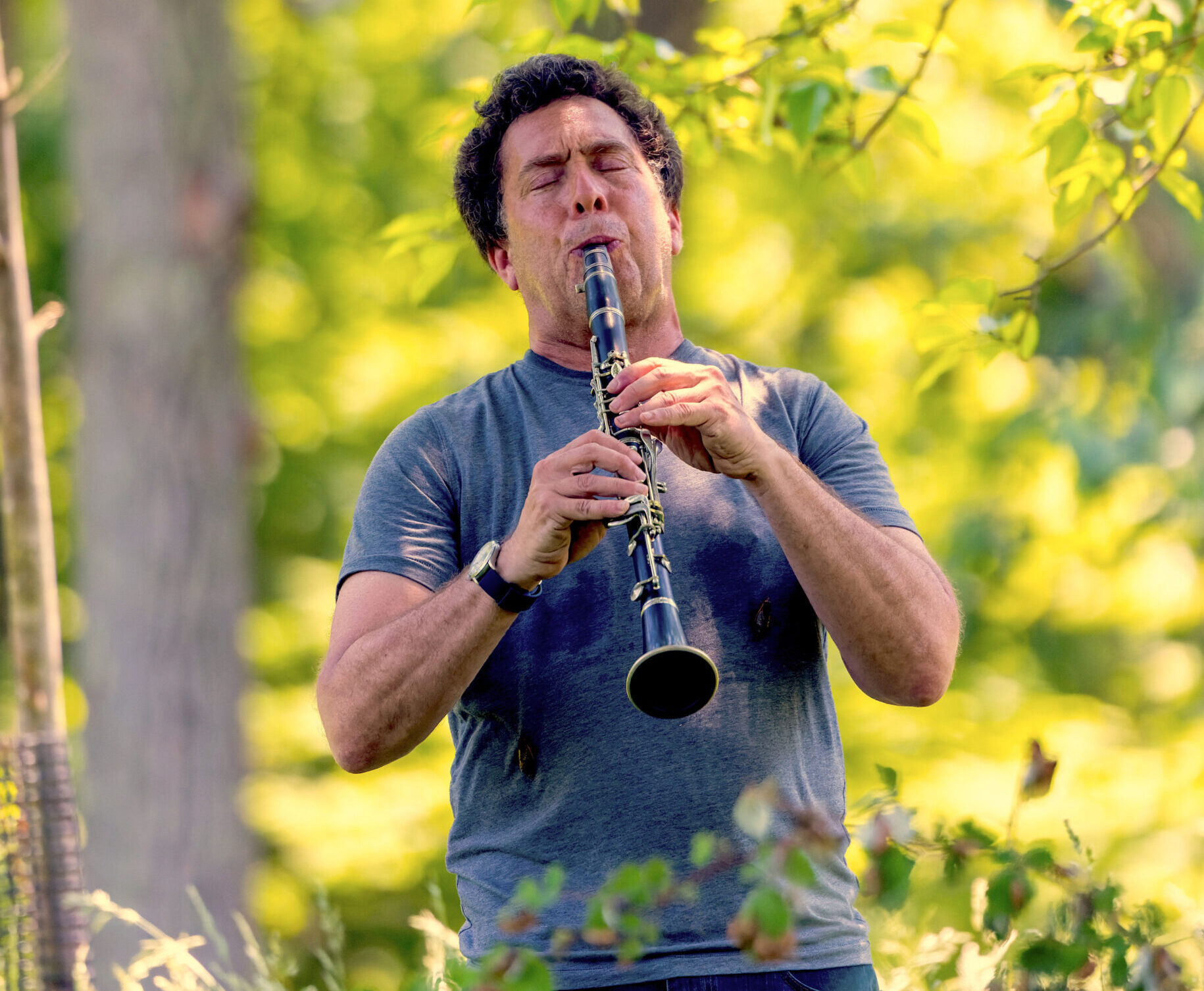
David Rothenberg • Interspecies Musician • Writer • Philosopher
He/Him • Co-author of Listening with Whales Musically
Musician and philosopher David Rothenberg wrote Why Birds Sing, Bug Music, Survival of the Beautiful and many other books, published in at least eleven languages. He has more than forty recordings out, including One Dark Night I Left My Silent House which came out on ECM, and more recently Just Leave It All Behind and Lost Steps. He has performed or recorded with Pauline Oliveros, Peter Gabriel, Ray Phiri, Suzanne Vega, Scanner, Elliott Sharp, Umru, Iva Bittová, and the Karnataka College of Percussion. In 2024 he won a Grammy Award as part of For the Birds, in the category of Best Boxed Set. Whale Music and Secret Sounds of Ponds are his latest books. Nightingales In Berlin and Eastern Anthems are his latest films. His piece Eleven Paths to Animal Music premiered at the Sammlung Hoffmann in Berlin in 2025. Rothenberg is Distinguished Professor at the New Jersey Institute of Technology.
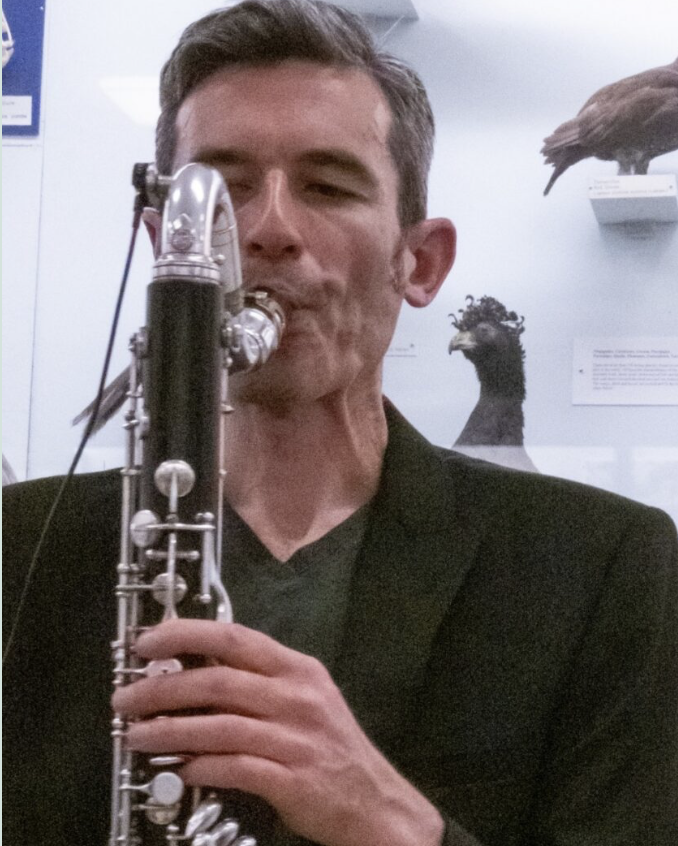
Alex South • Musician • Ecomusicologist • Bioacoustician
He/Him • Co-author of Listening with Whales Scientifically & Musically
Based in Scotland, Alex South is a musician and researcher inspired by the sounds of the more-than-human world. He creates and performs live music for clarinets and electronics, often in multi-artform collaborations, and teaches at the Royal Conservatoire of Scotland and University of St Andrews. In his compositional work he aims to produce musical experiences that highlight the wonderful, varied, and startling sounds of other animals, and are underpinned by rigorous research into animal communication. Alex’s recent Postdoctoral Fellowship at IASH (University of Edinburgh) was focused on the role of musicians in interspecies grieving practices. His PhD dissertation, Cetacean Citations (2024), combined practice-led research from the perspectives of ecomusicology and zoömusicology with bioacoustical analysis of the rhythms of humpback whale song. Listen to the Cetacean Citations portfolio here.
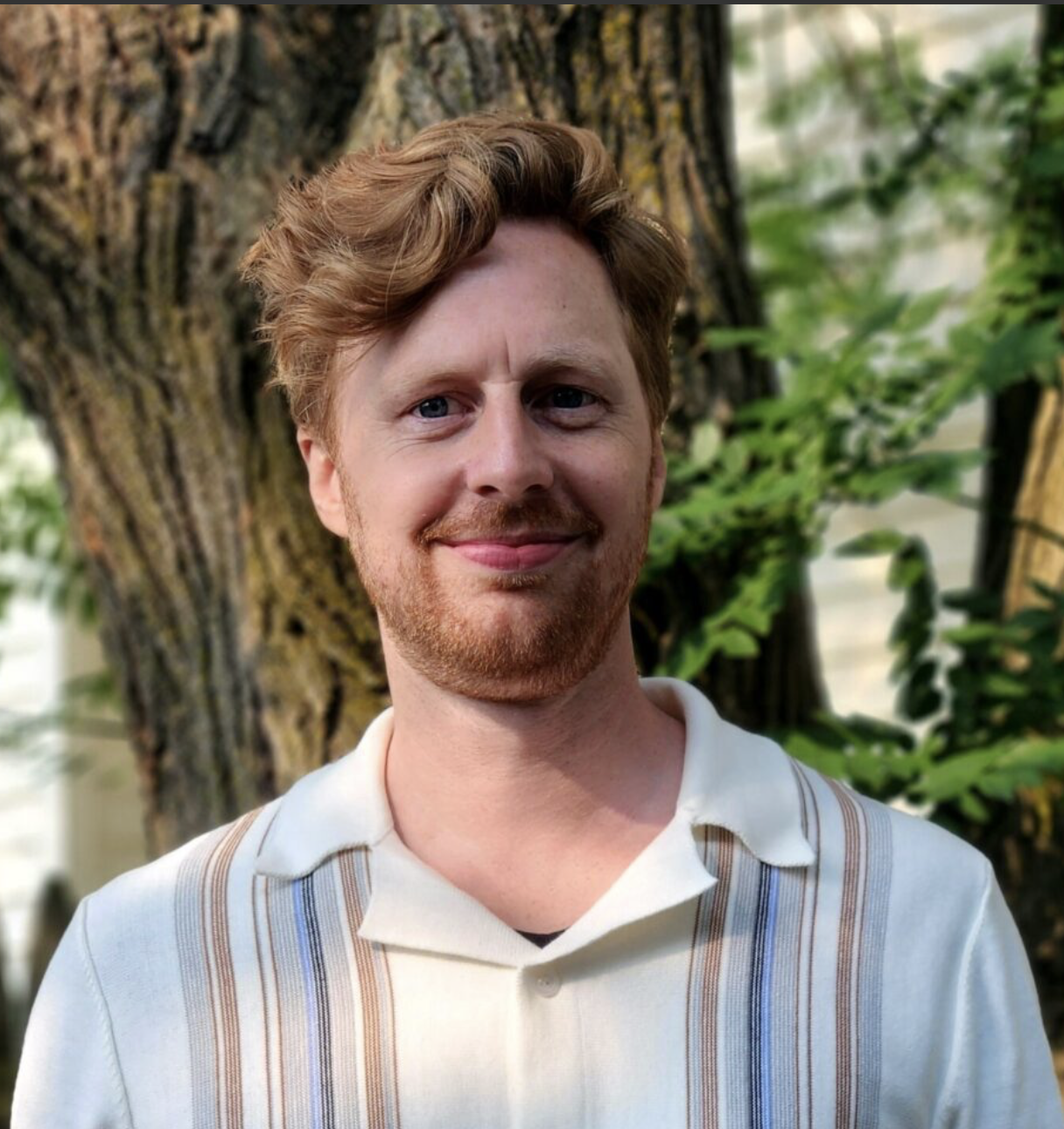
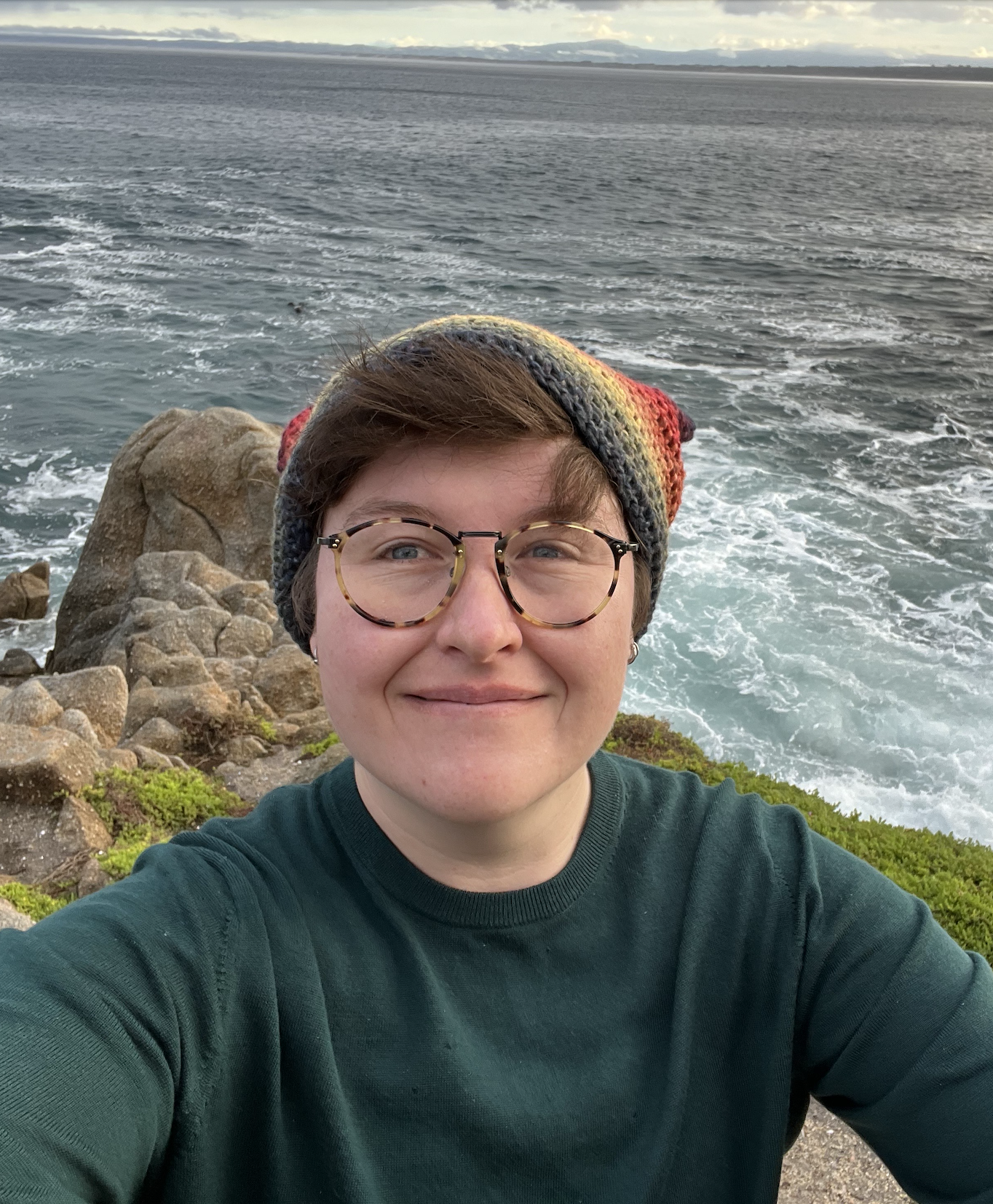
Finn Woodson-Gammon • Ethnomusicologist
He/They • Co-author of Listening with Whales Musically
Finn is an alum of the University of Nevada, Reno School of Music and holds both a Master’s degree and a PhD in Ethnomusicology from New York University, where they were a Henry M. MacCracken Fellow and a Dean’s Fellow. Their scholarship explores interrelationships between music, embodiment, and science; multispecies relations mediated through sound; and the ways in which music fosters intellectual, emotional, and spiritual resilience amid escalating global environmental challenges. They approach this work with a sustained commitment to gender-aware and decolonial perspectives, emphasizing ethical engagement, situated knowledge, and respect for diverse musical worlds. Their published research includes an article in Analytical Approaches to World Music on the intertwined histories of trees, violin-family instruments, and human bodies, examining how instrumental materiality shapes sensory engagement with music. They are also the author of “Listening-With Whales: Transcorporeal Sound, Queer Ecofeminism, and Musical Apprenticeship in the Anthropocene,” forthcoming in the edited volume Ecofeminism Otherwise: Situated Knowledges in a Time of Planetary Crisis. They have presented their work at conferences in the United States, Germany, and the Czech Republic.