
Listening Historically with Whales
Written by Max Chervin Bridge
As a historian whose research focuses on the history of underwater sound and whales, I’m often asked if I have listened to whales for real. These kinds of questions are familiar to historians of all stripes. People like adventure stories. One of the wonderful things about history is that its methods are eclectic. Historians often do (and should) chase down the past by going out into the field, “getting their feet wet,” and talking to people who lived the events they write about. But I and other historians do spend a lot more time than most sitting in archives looking at old pieces of paper, taking photos of said papers, and painstakingly sorting these on our laptops.
When I listen to or with whales, neither the people nor the whales I write about are often alive anymore – or if they are, I’m writing about things they did or heard many decades ago. Listening with whales historically offers the opportunity to embed in both time and space the voices and ears of humans and whales, to eavesdrop on processes of change over time, and to recover how people and whales have inhabited the past as historical animals. If our access to the past is mediated by old documents, tape recordings, and memories, listening to human-cetacean relationships through these sources gives us something no less valuable and rich than more “direct” experiences.
At its core, history provides the temporal dimension to listening, placing sounds in a larger context of past events and processes. In this sense, historical listening is an important component of other modes of scientific, musical, and ancestral listening. Since the 1970s, scientific research on humpback whale singing has often foregrounded its temporal dimensions: namely, how the notes, phrasing, and arrangement of songs change over time through cultural evolution. Concepts in whale song science such as rapid “cultural revolutions” in vocal behavior are historical frameworks. Likewise, these patterns of cultural change over time in the case of humpback whale song have helped sustain perceptions of the songs as aesthetic behavior or perhaps performance. When biologist and musician Katy Payne listened to decades worth of humpback whale song recordings across the Atlantic and Pacific oceans and wrote in 1991 that it is difficult to contemplate the cultural evolution of humpback whale song “without thinking of human beings and wondering about the ancient roots in nature of even our aesthetic behavior,” she was listening historically.
Other scientists listen to whales through time to understand how changes in vocal behavior signify larger environmental changes. Using archived field recordings from the Watkins Marine Mammal Sound Database (WMMSD) covering decades from the 1950s-1980s, Susan Parks and colleagues found evidence that North Atlantic right whales subtly altered the pitch of their calls in response to rising levels of background anthropogenic ocean noise. Understandings of ocean noise and its effects on cetacean life have always been historical.
Before scientists took much an interest in the biological effects of ocean noise, Indigenous Iñupiaq whaling groups in Utqiaġvik and other communities in Alaska fought for recognition of the potential deleterious acoustic effects of offshore oil exploration in the Beaufort Sea. In 1979, the Alaska Eskimo Whaling Commission wrote to the Department of Interior arguing that “greater attention should be paid to the observations of the Inupiat people” who understand the “reactions of Bowheads to noise”: “we as Inupiat people have observed the Bowhead whales for hundreds of years and are taught by our elders about whales and their behavior which helps us know how to approach such sensitive animals.” For Iñupiaq whalers, knowledge was history.
Bioacoustic tape recordings such as those digitized and archived through the WMMSD, Cornell’s Macaulay Library, or held by individual scientists and institutions offer one way to “‘listen’ to the past directly,” as Parks puts it. Biologist Taylor A. Hersh describes the experience of using these primary sources evocatively in an “ode to archival data” in her 2021 dissertation: “I, who study sperm whale codas over time and space, got to travel through the times and spaces of the researchers before me. I saw logbook pages peppered with drawings from bored crew members on whale-less days; found dried bits of sperm whale skin sandwiched between old datasheets; heard earnestly professional graduate student voiceovers at the starts of recordings devolve into peals of laughter.”
As Hersh gestures to, traveling through the times of past listeners involves much more than listening to whales. Sound recordings do not offer a transparent window onto the sounds of the past. They are mediated by technological peculiarities, cultural norms that shaped what was recorded and how, and by auditory cultures that heard these sounds in particular ways always distinct from what we hear in the recordings today. As a historian, I am interested not only in the sounds held on the records, but the practices, cultures, and modes of listening hiding behind the recordings. Those scribbles and peals of laughter are often even important for my purposes: to not just listen to the recordings with my own ears, but to try to inhabit the “period ear” of the time – to “listen to listening” as several historians have put it. That is the work of sensory history.
To return to whale song, for example, my research has focused less on how whale song itself has evolved over time than the cultural history of how human listening has evolved over time. I have my own thoughts when I listen to the landmark LP record Songs of the Humpback Whale (1970), but what did people in 1970 think? To get at that, we have to listen around the record – scouring archival letters, newspaper databases, reviews, interviews, and so on. These written sources are valuable, but they also point us to other sound recordings too. What kinds of sounds created the conditions of possibility for people to hear whale song how they did? We can also listen to the many ways musical artists incorporated whale song into their compositions to hear not just what they produced, but how they listened. I have talked to some of these artists, listened to or read their work, listened to many sound recordings that prepared the ears of listeners in the years leading up to 1970, watched and listened to talk shows, radio specials, and films evidencing whale song’s evolving cultural connotations year to year, and read countless newspaper clippings in which people have tried to put into words what they were hearing – often betraying something about the larger auditory culture they were a part of. I’ve been astounded by just how granular and historically contingent these cultures around Songs of the Humpback Whale were. If the record had been released a decade or even 5 years earlier or later, it would have sounded different. It would have carried different cultural meanings.
But what about listening with whales? What about their period ear? Is it possible to understand in any way how nonhuman animals have listened to the changing world around them in the past? I think so. This difficult and endlessly rewarding prospect is called animal history, a subfield that has evolved greatly over the last half-century. While animal historians have often tried to recover how nonhuman animals have influenced the past – their “agency” over historical events and processes – I and other animal historians have also turned to focus more attention on how nonhuman animals have experienced the past – their sensory and emotional lives. The historical animal is certainly more than just an object, and also more than just an agent. As living beings with bodies, minds, sensory capacities, and affective relationships to their surroundings, the historical animal is a subject too.
Many animal historians draw a great deal on scientific research to guide their understanding of past animal behavior, perception, and experience. Some – if fewer – also draw on other less academically institutionalized knowledge traditions to offer frameworks for conceptualizing the historical animal, such as those of Iñupiaq whalers. By using the tools of animal and sensory history, however, I suggest that we can learn a lot about past nonhuman experiences by listening alongside the most human of sources: those documents and material artifacts of the past that evidence how humans whose lives have been deeply and practically intertwined with other animals provide traces of nonhuman subjectivity as well as human intentions. Some have called this “intersubjectivity”: when extensive engagement between human and nonhuman subjects creates the conditions for each to partially inhabit – or at least gain knowledge of – the subjectivity of the other. Because hunters of all sorts practically rely on knowledge of what the animals they hunt feel, see, hear, or otherwise sense as a matter of survival, the sensory practices and technologies used by hunters are of enormous value in tracing the sensory lives of both human and nonhuman.
So, one way to listen with past whales is to think with the whalers of the past who have adapted their techniques and technologies around the power of the cetacean ear. Long before the advent of modern marine mammal bioacoustics in the mid-late 20th century, whalers around the world gained embodied knowledge of whales as hearing subjects. My own research has focused on the 19th-century Anglo-American era whaling industry. Think Moby-Dick. Here too, I have been astounded with how intricately and carefully whalemen attended to cetacean hearing in their labor and craft. They developed technologies and practices to muffle their oars and boats. They appropriated the sonic environment of wind and water around them as a kind of camouflage and adapted their practices to different weather conditions. Most importantly, they learned over time how sensitive whales’ hearing was. And through their evolving technologies and practices, they recorded traces of whales becoming better listeners over the course of the 19th century. Listening to these traces has opened my ears to how they might have experienced the changing sonic environment around them and adapted their social, emotional, and sensory lives around it in real time.
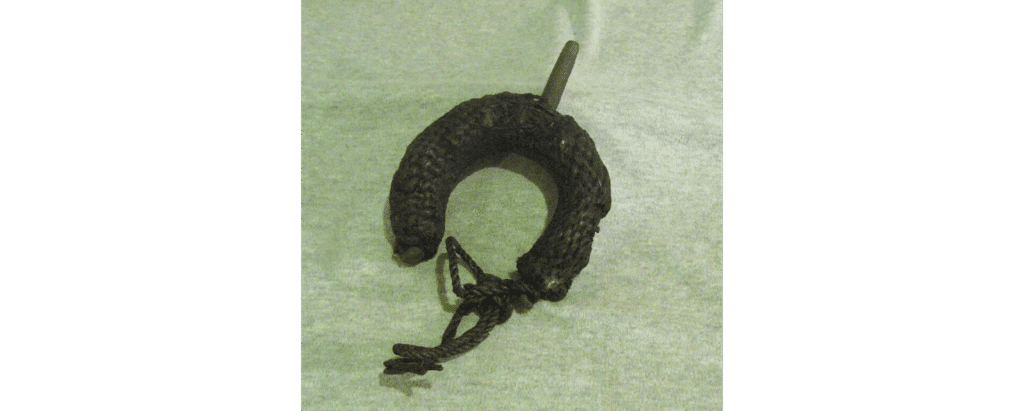
We can’t know for certain what whales heard or felt about what they heard. But this is true of past humans as well. Written sources are also not transparent windows in the minds of their writers, but artifacts produced at the convergence of many causal forces both human and nonhuman, cultural and material. The historian Etienne Benson puts it best. The material artifacts produced by whalers and others who have lived closely and interdependently alongside cetaceans – written or non-written – are “a collection of traces of the animal who writes through the human as well as of the human who writes about the animal.” The best sensory history and the best animal history – the best practices of historical listening with and to whales – will enrich the past as a “lived-in place” inhabited by both humans and nonhumans.