Listening For Change with Whales
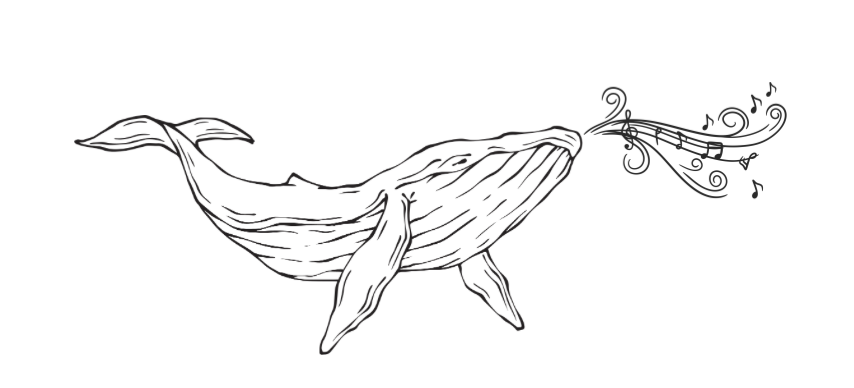
In the 1970s, the theorization of humpback whale vocalization as song and the widespread reception of their singing through the album Songs of the Humpback Whale slowly eroded the idea of whales as silent unintelligent beings. People listening to these recordings and imaging themselves through the experience of a whales in the ocean predated by industrialized commercial whalers, practiced erosic listening, letting themselves be moved by the their vocalizations, grieve with them, and then take actions to change. Arguably, listening to whales sings and attempting to listen with them, contributed to a massive re-orientation of people’s moral compass. Many started to care about whales and the ocean, and collective action through Save the Whales and other movements. So many listened for change, believing that a better future was possible. Learn more about how that happens historically, musically, scientifically, and ancestrally.
But what does it mean to listen for change more broadly? In a world where so much is wrong, we ask to also focus on the countless ways in which collaborative hopeful change is already happening, not to bypass the bad, but to foreground the reality that change, and doing better, is possible, and many already are doing it. Listening here is not hearing, it is an intentional discerning compass that practices listening for what is already in motion and for those initiatives within humans and more-than-humans that are eroding the status quo and helping create a better future. In this sense, listening for change is an orientation towards what is already changing. Imagining ourselves through the other, being-with rather than observing or being distant.
To be continued….
Listening For Change
Listening for Change is a collaborative movement grounded in listening as a way of recognizing and supporting transformation in becoming. It brings attention to the voices, relationships, and initiatives that are challenging inherited systems of oppression and creating more just, sustainable, and reciprocal way of living. Rather than positioning change as something distant or abstract, Listening for Change focuses on real people doing real work that reshapes the world, work that often remains unheard and undervalued beyond their immediate communities. Listening for Change amplifies those many efforts and brings them together to contrast the inevitability of the status quo, highlighting that creating more good is not only possible, but already happening. Listening, in this context, is an intentional orientation, one that seeks to understand, connect, and amplify without presuming to speak for others. By foregrounding listening as both method and responsibility, the movement creates space for reflection, dialogue, and the possibility of aligning ourselves with forms of change that are already in motion.

Listening For Change in practice
Listening for Change also takes form through Listening for Change in Practice, a podcast that documents how listening can support and accompany processes of social and environmental transformation. Created as part of the broader Listening for Change movement, the podcast brings together conversations with individuals and communities who are working towards creating more equitable and sustainable ways of living.
This work is an ongoing collaboration between public health scientist Teresa Chahine and musicologist and ecofeminist activist Marie Comuzzo, who approach listening both as method and responsibility.
In Listening for Change in Practice, Teresa travels across the world, from the foothills of the Himalayas to the Upper Andes, and the neighborhood of New Haven CT where she resides, engaging in conversations with people working within their communities to learn the many ways they are creating different pathways for a better future. These conversations show not only how change looks like, but specifically how it happens and how to make it happen. By documenting these stories, Listening for Change in Practice contributes to a growing body of voices that help clarify what is possible and how hopeful transformation is already underway.